
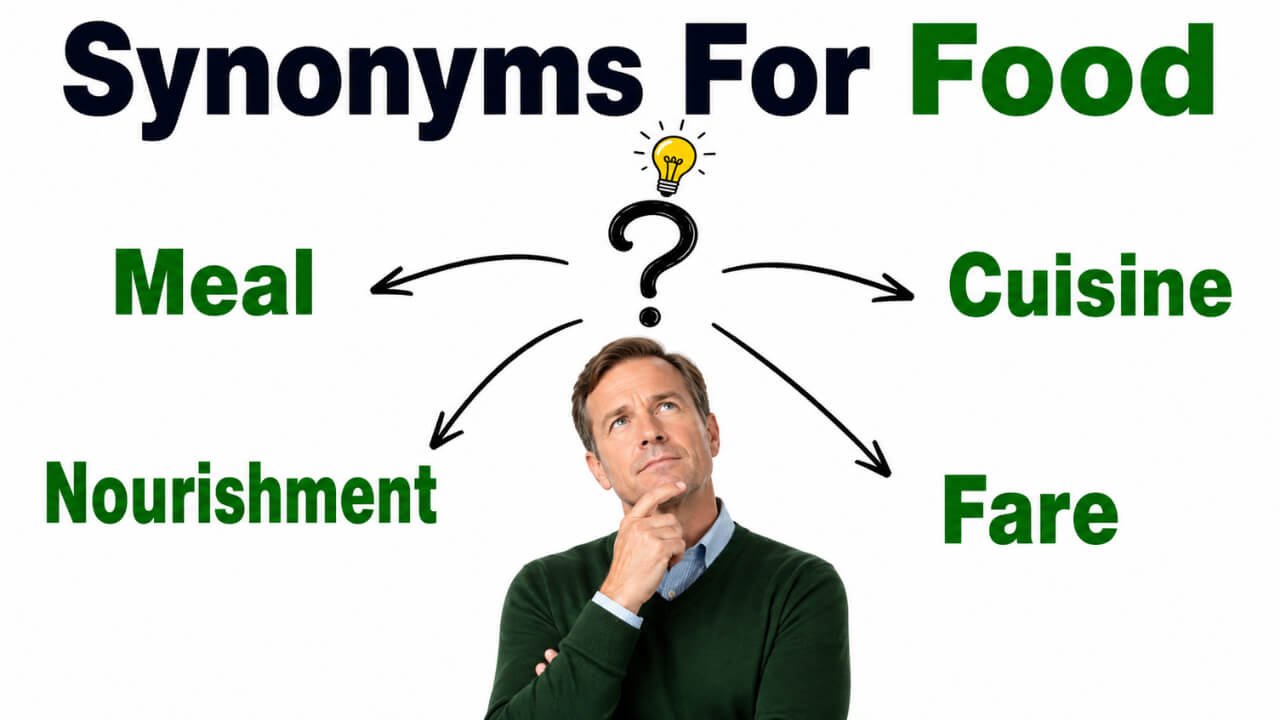
Quick Answer: Synonyms for food include meal, cuisine, dish, fare, nourishment, sustenance, provisions, nutrition, eats, and refreshments. Use meal for breakfast, lunch, or dinner, cuisine for a cooking style, dish for one prepared item, fare for served food, nourishment for health and body needs, and provisions for stored or supplied food.
Pronunciation and Word Details
Word: Food.
Pronunciation: /fuːd/.
Part of Speech: Noun.
Meaning: Something people, animals, or living things eat to get energy, nourishment, and growth.
US Pronunciation:
UK Pronunciation:
What Does “Food” Mean?
Food means something eaten by people, animals, or living things to provide energy, nourishment, strength, and growth. It is a noun and can refer to a single item, a full meal, a type of cuisine, a prepared dish, or edible supplies.
The word food works in many sentence contexts. It can describe everyday eating, health, cooking, culture, restaurants, family meals, recipes, diet, agriculture, nutrition, and survival.
Example: Fresh food gives the body energy.
Example: The event served warm food to guests.
Example: Italian cuisine is known for rich and comforting food.
Meaning, Tone, and Context of “Food”
Food is a neutral and common word. It is suitable for casual speech, formal writing, educational content, health topics, cooking articles, restaurant descriptions, and everyday conversation.
The tone depends on context. In daily speech, food sounds simple and natural. In health writing, words like nutrition, nourishment, and diet sound more specific. In travel or cooking content, cuisine, fare, and dishes sound more polished.
Tone: Neutral, clear, and widely understood.
Formality: Works in both casual and formal contexts.
Common Use: Meals, cooking, eating habits, health, recipes, culture, restaurants, groceries, and nutrition.
Specific Alternatives: Cuisine, dish, meal, nourishment, provisions, and refreshments.
When and How to Use “Food”
For Everyday Eating: Use food when talking generally about things people eat.
Example: We bought food for dinner.
For Meals: Use food when referring to breakfast, lunch, dinner, or snacks.
Example: The food at the family dinner was delicious.
For Health and Nutrition: Use food when discussing diet, energy, nutrients, and body needs.
Example: Healthy food supports growth and strength.
For Cooking: Use food when describing recipes, ingredients, preparation, or taste.
Example: Fresh herbs made the food more flavorful.
For Culture: Use food when talking about traditions, regional meals, or cooking styles.
Example: Local food often reflects history and family customs.
For Supplies: Use food when discussing stored meals, groceries, or provisions.
Example: The shelter collected food for families.
Best Synonyms for Food
Meal: Food eaten at a specific time, such as breakfast, lunch, or dinner.
Example: We shared a warm meal after work.
Cuisine: A style of cooking connected to a place, culture, or tradition.
Example: The restaurant serves traditional cuisine.
Dish: A prepared food item served as part of a meal.
Example: The rice dish was full of flavor.
Fare: Food served or available in a place.
Example: The café offered simple but tasty fare.
Nourishment: Food that supports health, energy, and growth.
Example: Children need proper nourishment every day.
Sustenance: Food that keeps someone alive and strong.
Example: Bread and soup provided basic sustenance.
Provisions: Food supplies kept for later use or travel.
Example: The hikers packed provisions for the long route.
Nutrition: Food value related to health, nutrients, and body function.
Example: Good nutrition helps the body stay active.
Eats: Casual word for food or snacks.
Example: The party had plenty of tasty eats.
Refreshments: Light food and drinks served at an event.
Example: Refreshments were served after the meeting.
50 Synonyms for Food with Short Meanings
- Meal: Food eaten at a regular eating time.
- Cuisine: A cultural or regional cooking style.
- Dish: A prepared item of food.
- Fare: Food served or available somewhere.
- Nourishment: Food that supports health and growth.
- Sustenance: Food needed for life and strength.
- Provisions: Stored or supplied food.
- Nutrition: Food value for health and body function.
- Eats: Casual word for food.
- Refreshments: Light food and drinks.
- Snack: Small amount of food between meals.
- Breakfast: Morning meal.
- Lunch: Midday meal.
- Dinner: Main evening meal.
- Supper: Light or evening meal.
- Feast: Large special meal.
- Banquet: Formal large meal.
- Repast: Formal word for a meal.
- Rations: Limited food supplies.
- Groceries: Food bought for home use.
- Edibles: Things that can be eaten.
- Viands: Formal word for prepared food.
- Victuals: Old fashioned word for food supplies.
- Chow: Informal word for food.
- Grub: Informal word for food.
- Bite: Small amount of food.
- Morsel: Small piece of food.
- Treat: Enjoyable food, often sweet or special.
- Delicacy: Rare, special, or fine food.
- Specialty: Food a place or cook is known for.
- Ingredients: Items used to make food.
- Produce: Fresh fruits and vegetables.
- Bread: Basic baked food often used as a staple.
- Meat: Animal flesh eaten as food.
- Seafood: Edible fish and shellfish.
- Vegetables: Edible plant parts used as food.
- Fruit: Sweet edible plant product.
- Grains: Cereal crops used as food.
- Dairy: Milk based food products.
- Protein: Food group that supports body repair and growth.
- Carbohydrates: Foods that provide energy.
- Staples: Basic foods eaten often.
- Cookery: Food preparation or cooking style.
- Menu Items: Foods listed for selection.
- Courses: Parts of a served meal.
- Appetizers: Small foods served before a main meal.
- Main Course: Main dish in a meal.
- Dessert: Sweet food served after a meal.
- Comfort Food: Food that gives emotional warmth.
- Table Fare: Food served at a table.
Read Also:
Synonyms for Influence

Synonyms for Food by Context
When Food Means a Meal
Use these words when talking about food eaten at a certain time or served together.
Meal: We enjoyed a quiet meal at home.
Breakfast: Breakfast included eggs, fruit, and bread.
Lunch: Lunch was light but filling.
Dinner: Dinner was served at seven.
Supper: They prepared a simple supper after sunset.
When Food Means Cooking Style
Use these words when describing cultural, regional, or traditional cooking.
Cuisine: The city is famous for its rich cuisine.
Cookery: Her cookery combines fresh ingredients and careful technique.
Fare: The village offered local fare to visitors.
Specialty: The chef’s specialty was a spicy rice dish.
When Food Means Health and Energy
Use these words when discussing nutrients, growth, strength, and body needs.
Nourishment: Fresh vegetables provide important nourishment.
Nutrition: Balanced nutrition supports daily energy.
Sustenance: Simple meals gave the workers sustenance.
Diet: A healthy diet includes many types of food.
When Food Means Supplies
Use these words when talking about stored, packed, or shared food.
Provisions: The family kept provisions for emergencies.
Rations: Soldiers received daily rations.
Groceries: She bought groceries for the week.
Supplies: The kitchen stored food supplies carefully.
When Food Means Casual Eating
Use these words in relaxed conversation or informal situations.
Eats: The gathering had music and good eats.
Chow: Everyone came in for chow after the work was done.
Grub: We found some hot grub at the roadside café.
Bite: Let’s grab a quick bite before leaving.
Another Word for Food
Another word for food is meal when you mean something eaten at breakfast, lunch, or dinner. The best single replacement depends on meaning. Use cuisine for a cooking tradition, dish for one prepared item, nourishment for health, and provisions for stored food.
Original: We need food before the trip.
Better Option: We need provisions before the trip.
Original: The food was served hot.
Better Option: The meal was served hot.
Original: The food from that region is famous.
Better Option: The cuisine from that region is famous.
Original: This food gives children energy.
Better Option: This nourishment gives children energy.
When Not to Use “Food”
Do not use food when a more exact word would make the meaning clearer. Since food is broad, it can sound vague in recipes, restaurant writing, health content, and formal descriptions.
Weak: The food was on the table.
Better: The meal was on the table.
Weak: The food had many spices.
Better: The dish had many spices.
Weak: The country has famous food.
Better: The country has famous cuisine.
Weak: The children need better food.
Better: The children need better nourishment.
Weak: We packed food for the journey.
Better: We packed provisions for the journey.
Words Commonly Confused With Food
Food vs Meal: Food is a general word for edible things. Meal means food eaten at a specific time.
Food vs Dish: Food can be any edible item. Dish means a prepared food item, often part of a meal.
Food vs Cuisine: Food is general. Cuisine refers to a style of cooking from a region, culture, or tradition.
Food vs Nutrition: Food is what people eat. Nutrition is the value food gives to the body.
Food vs Diet: Food means edible items. Diet means the regular pattern of what someone eats.
Food vs Provisions: Food is general. Provisions means food supplies prepared for use later.
Food vs Refreshments: Food can be a full meal. Refreshments usually means light food and drinks served at an event.
Which Synonym Should You Choose?
Choose meal when writing about breakfast, lunch, dinner, or a complete serving of food.
Choose dish when writing about one prepared item, such as soup, curry, salad, or pasta.
Choose cuisine when writing about cultural, regional, or traditional cooking.
Choose fare when describing food served in a place, especially in polished writing.
Choose nourishment when writing about health, growth, care, and body needs.
Choose nutrition when writing about nutrients, diet quality, and healthy eating.
Choose provisions when writing about stored food, travel supplies, or emergency supplies.
Choose refreshments when writing about light food and drinks at a meeting, class, event, or gathering.
Choose eats when writing in a casual, friendly tone.
Choose delicacy when describing rare, special, or carefully prepared food.
Real Life Examples of “Food” in Sentences
Original: The food was delicious.
Better Option: The meal was delicious.
Original: I enjoy spicy food.
Better Option: I enjoy spicy cuisine.
Original: The food was served in a bowl.
Better Option: The dish was served in a bowl.
Original: We packed food for the journey.
Better Option: We packed provisions for the journey.
Original: Children need healthy food.
Better Option: Children need healthy nourishment.
Original: The event offered food after the speech.
Better Option: The event offered refreshments after the speech.
Original: The food from this region is unique.
Better Option: The cuisine from this region is unique.
Original: We bought food for the house.
Better Option: We bought groceries for the house.
Original: The food gave the workers energy.
Better Option: The sustenance gave the workers energy.
Original: The restaurant has great food.
Better Option: The restaurant serves excellent fare.
Synonym Groups and Usage Differences
Meal Group
Words like meal, breakfast, lunch, dinner, and supper refer to food eaten at a specific time or sitting.
Example: The family shared a warm meal in the evening.
Cuisine Group
Words like cuisine, fare, cookery, and specialty describe food by cooking style, culture, place, or preparation.
Example: The city is known for flavorful local cuisine.
Health Group
Words like nourishment, nutrition, sustenance, and diet focus on the body, health, energy, and growth.
Example: Good nutrition supports an active life.
Supply Group
Words like provisions, rations, groceries, and supplies describe food stored, carried, limited, or prepared for later use.
Example: The travelers carried provisions for three days.
Casual Eating Group
Words like eats, grub, chow, and bite work best in informal conversation.
Example: We stopped for a quick bite before the meeting.
Antonyms of Food
Hunger: A need or desire for food.
Starvation: Extreme lack of food.
Fasting: Going without food for a period of time.
Thirst: Need or desire for drink rather than food.
Inedible Matter: Something that cannot be eaten safely.
Waste: Food or material thrown away and not used for eating.
Poison: Something harmful if eaten.
Empty Stomach: A state of having eaten nothing.
Malnutrition: Poor health caused by lack of proper nutrition.
Deprivation: Lack of necessary food or resources.
Comparison: Food vs Related Words
Food vs Meal
Food is a broad word for anything edible. Meal means food eaten at a particular time, usually as a complete serving.
Example With Food: We need food for the guests.
Example With Meal: We prepared a meal for the guests.
Food vs Dish
Food can mean any edible item. Dish means a prepared item, often with ingredients cooked or arranged together.
Example With Food: The food smelled fresh.
Example With Dish: The dish smelled fresh and spicy.
Food vs Cuisine
Food is general. Cuisine describes a cooking style connected with culture, region, tradition, or technique.
Example With Food: I like the food from that area.
Example With Cuisine: I like the cuisine from that area.
Food vs Nourishment
Food describes what is eaten. Nourishment focuses on the way food supports health, strength, growth, and energy.
Example With Food: The child needs food.
Example With Nourishment: The child needs proper nourishment.
Food vs Provisions
Food is a general term. Provisions means food supplies prepared, stored, packed, or carried for later use.
Example With Food: We brought food for the trip.
Example With Provisions: We brought provisions for the trip.
Common Phrases and Expressions With Food
Comfort Food: Food that gives emotional warmth or familiar satisfaction.
Fast Food: Quickly prepared food, often served for convenience.
Fresh Food: Food that is recently prepared, picked, cooked, or bought.
Healthy Food: Food that supports wellness, energy, and nutrition.
Junk Food: Food with low nutritional value and often high sugar, fat, or salt.
Soul Food: Traditional comforting food connected with culture and family memory.
Food for Thought: An idea that gives someone something to consider.
Food Supply: Available food for a group, place, or period of time.
Food Chain: A natural order of living things based on eating and being eaten.
Food Waste: Edible food that is thrown away or unused.
Common Mistakes to Avoid
A common mistake is using food when a more specific word would improve clarity. In restaurant writing, dish, meal, fare, or cuisine can sound more exact.
Another mistake is confusing food with nutrition. Food is what someone eats, while nutrition is the value the body receives from it.
Writers also use food too many times in one paragraph. Repetition can make writing sound plain. Replace repeated uses with meal, dish, cuisine, nourishment, provisions, or refreshments when the context allows.
Avoid using informal words like grub, chow, or eats in formal writing. These words work better in casual conversation.
Also avoid using cuisine for every type of food. Cuisine is best for cooking traditions, cultural styles, and regional food, not for a single snack or grocery item.
Conclusion
Learning synonyms for food helps you write with more precision, variety, and natural expression. Use meal for regular eating times, dish for prepared items, cuisine for cultural cooking styles, nourishment for health, provisions for supplies, and refreshments for light event food. Since food is a broad word, the best synonym depends on whether you mean eating, cooking, nutrition, culture, storage, or casual snacks.
FAQs About Synonyms for Food
What is the best synonym for food?
The best synonym for food depends on context. Meal is best for breakfast, lunch, or dinner, while cuisine is best for a cooking style.
What is another word for food in formal writing?
Formal alternatives for food include nourishment, sustenance, cuisine, fare, and provisions.
What is a casual synonym for food?
Casual synonyms for food include eats, grub, chow, and a bite.
What is a synonym for healthy food?
Good synonyms or related phrases include nourishment, nutrition, balanced diet, and wholesome food.
What is the difference between food and cuisine?
Food means anything edible. Cuisine means a cooking style connected to a culture, region, or tradition.
What is the difference between food and meal?
Food is general. Meal means food eaten at a regular time, such as breakfast, lunch, or dinner.
What is the opposite of food?
The opposite of food can be hunger, starvation, fasting, or inedible matter, depending on the meaning and context.
