
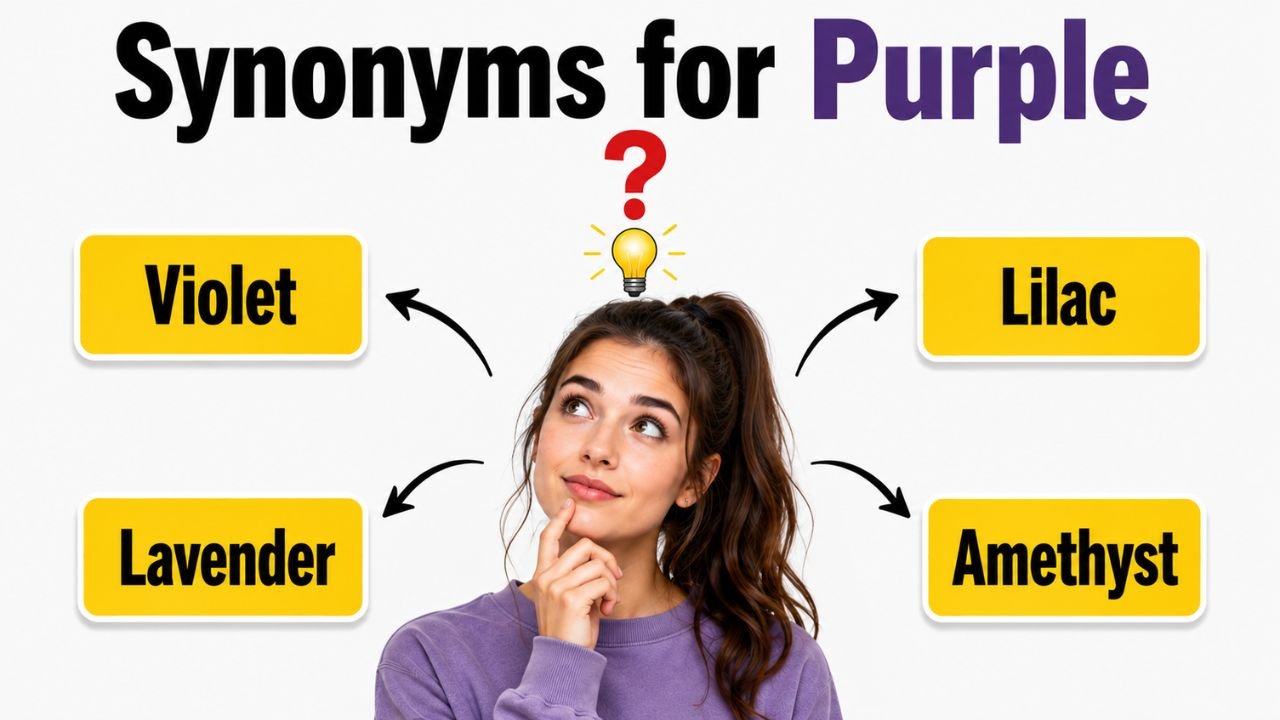
Quick Answer: The best synonyms for purple include violet, lavender, lilac, mauve, plum, amethyst, orchid, grape, aubergine, and mulberry. Violet is the strongest general alternative when referring to a cool purple hue. Lavender and lilac suit pale, soft colors, while plum, aubergine, and mulberry describe darker or warmer shades. Amethyst works well for rich jewel tones, orchid suggests a bright floral purple, and grape is natural in casual descriptions.
Pronunciation and Word Details
Word: Purple.
Pronunciation: /ˈpɜː.pəl/.
Part of Speech: Noun and adjective, and occasionally a verb.
Meaning: A color created by the visual combination of red and blue, with shades ranging from pale lavender to deep violet.
US Pronunciation:
UK Pronunciation:
What Does “Purple” Mean?
Purple means a color that appears between red and blue and includes many pale, bright, muted, warm, and dark shades.
As an adjective, purple describes the color of an object.
Example: She wore a purple scarf.
As a noun, purple refers to the color itself or a particular shade within the purple color family.
Example: Purple adds richness to the room.
Purple can occasionally function as a verb meaning to become purple or make something purple.
Example: The evening sky began to purple as the sun disappeared.
The word can describe clothing, flowers, fruit, paint, light, furniture, artwork, natural scenery, and decorative objects. It may also carry associations with royalty, creativity, luxury, mystery, dignity, or imagination.
The precise meaning depends on the shade. Lavender is pale and soft, violet is cool and vivid, plum is dark and warm, while mauve is muted and slightly gray.
Meaning, Tone, and Context of “Purple”
Purple is a neutral and widely understood color word. It is suitable for casual conversation, formal descriptions, creative writing, design discussions, product descriptions, fashion writing, art criticism, and technical color comparisons.
Neutral Use: Purple is a general color term that works in most situations.
Conversational Use: People commonly use purple when an exact shade is unnecessary.
Formal Use: Purple can appear in reports, essays, descriptions, and professional communication, although a more precise shade may improve accuracy.
Creative Use: Writers often use purple to create images of mystery, richness, twilight, flowers, royalty, or dramatic scenery.
Technical Use: In color focused writing, purple may be too broad. Violet, red violet, blue violet, or a specific shade name may be more accurate.
Emotional Use: Purple can suggest creativity, imagination, dignity, calmness, luxury, or intensity, depending on its depth and surrounding colors.
Decorative Use: Pale purples often create a soft atmosphere, while dark purples may feel dramatic, formal, or luxurious.
Purple itself is not strongly formal or casual. Its tone changes according to the shade, sentence, subject, and setting.
When and How to Use “Purple”
For General Color Description
Use: Choose purple when the exact shade is not important.
Example: A purple blanket was folded across the bed.
For Clothing and Fashion
Use: Purple can describe dresses, shirts, accessories, shoes, and fabric.
Example: He selected a purple tie for the formal dinner.
For Flowers and Plants
Use: Purple is useful when describing flowers, leaves, berries, or natural pigments.
Example: Purple flowers grew beside the garden path.
For Interior Design
Use: Purple can describe walls, furniture, cushions, curtains, and decorative details.
Example: The purple cushions added depth to the neutral room.
For Art and Illustration
Use: Purple works as a general term for a mixture or visual relationship between red and blue.
Example: The artist used purple to deepen the evening shadows.
For Natural Scenery
Use: Purple may describe mountains, clouds, sunsets, skies, or distant landscapes.
Example: The mountains appeared purple in the fading light.
For Rich or Luxurious Imagery
Use: Dark purple can suggest richness, dignity, elegance, or royal style.
Example: Deep purple fabric gave the room a luxurious appearance.
For Soft or Peaceful Imagery
Use: Pale purple shades such as lavender and lilac often create a gentle or calming effect.
Example: The pale purple walls made the bedroom feel peaceful.
For Food and Fruit
Use: Purple can describe grapes, plums, berries, vegetables, or natural food coloring.
Example: The salad included thin slices of purple cabbage.
For Figurative Expressions
Use: Purple appears in expressions connected with ornate writing, strong emotion, success, or high social rank.
Example: The editor removed several examples of purple prose.
Best Synonyms for Purple
Violet
Synonym: A cool purple color that is closer to blue.
Example: Violet light spread across the evening sky.
Lavender
Synonym: A pale, soft purple with a cool and gentle appearance.
Example: The walls were painted a calming lavender shade.
Lilac
Synonym: A light purple that often has a soft pink influence.
Example: She placed lilac flowers in a glass vase.
Mauve
Synonym: A muted purple with gray or pink undertones.
Example: The mauve curtains created a quiet, elegant atmosphere.
Plum
Synonym: A deep purple with warm red or brown undertones.
Example: He chose a plum jacket for the winter event.
Amethyst
Synonym: A rich, clear purple resembling the gemstone.
Example: The fabric had a brilliant amethyst color.
Orchid
Synonym: A bright floral purple that may contain pink tones.
Example: Orchid cushions brought energy to the sitting area.
Grape
Synonym: A medium or dark purple resembling the skin of purple grapes.
Example: The child selected a grape colored backpack.
Aubergine
Synonym: A very dark purple with warm brown or red undertones.
Example: The aubergine wall created a dramatic background.
Mulberry
Synonym: A dark reddish purple inspired by ripe mulberries.
Example: Mulberry fabric added warmth to the room.
50 Synonyms for Purple with Short Meanings
- Violet: A cool purple that leans toward blue.
- Lavender: A pale and soft cool purple.
- Lilac: A light purple with a gentle pink influence.
- Mauve: A muted purple with gray or pink undertones.
- Plum: A deep and warm reddish purple.
- Amethyst: A rich jewel toned purple.
- Orchid: A bright floral purple with pink tones.
- Grape: A medium or dark fruit inspired purple.
- Aubergine: A very dark warm purple.
- Eggplant: A dark brownish purple resembling eggplant skin.
- Mulberry: A dark purple with noticeable red tones.
- Heliotrope: A vivid pinkish purple inspired by flowers.
- Wisteria: A soft medium purple with cool undertones.
- Periwinkle: A pale blue purple color.
- Thistle: A light grayish purple.
- Heather: A muted purple with soft gray or pink tones.
- Iris: A clear floral purple that may lean blue.
- Pansy: A rich dark purple inspired by the flower.
- Magenta: A vivid red purple color.
- Fuchsia: A bright pink purple shade.
- Burgundy: A dark red color with purple influence.
- Wine: A deep red purple resembling dark wine.
- Damson: A dark purple inspired by damson fruit.
- Raisin: A very dark muted purple brown.
- Berry: A rich reddish purple associated with dark berries.
- Currant: A deep red purple inspired by ripe currants.
- Royal Purple: A strong, rich purple associated with luxury.
- Imperial Purple: A deep and dignified purple.
- Tyrian Purple: A historic rich red purple shade.
- Deep Purple: A dark and highly saturated purple.
- Dark Purple: A purple with low lightness and strong depth.
- Light Purple: A pale version of standard purple.
- Pale Purple: A delicate purple with high lightness.
- Soft Purple: A gentle and low intensity purple.
- Pastel Purple: A light purple with a soft appearance.
- Bright Purple: A clear and energetic purple.
- Vivid Purple: A strong purple with high intensity.
- Electric Purple: A brilliant and highly saturated purple.
- Dusty Purple: A muted purple with gray influence.
- Smoky Purple: A subdued purple with dark gray undertones.
- Muted Purple: A low intensity purple without strong brightness.
- Dusky Purple: A darkened and slightly muted purple.
- Blue Violet: A purple shade that strongly leans toward blue.
- Red Violet: A purple shade that strongly leans toward red.
- Purple Violet: A balanced shade between purple and violet.
- Lavender Gray: A pale gray with a purple influence.
- Purple Gray: A neutral gray mixed with purple.
- Deep Lilac: A stronger and darker form of lilac.
- Pale Lavender: A very light and delicate lavender shade.
- Byzantium: A deep purple with warm red undertones.
Read Also:
Synonyms for Okay

Synonyms for Purple by Context
When Purple Means a Cool Blue Based Shade
Violet, blue violet, iris, periwinkle, and wisteria are useful when purple appears closer to blue than red.
Violet is the strongest broad substitute. Blue violet is more precise when the blue influence is obvious. Periwinkle is much lighter and softer.
Example With Purple: The purple flowers stood out against the green leaves.
Example With Violet: The violet flowers stood out against the green leaves.
Example With Periwinkle: The periwinkle flowers gave the garden a softer appearance.
When Purple Means a Pale and Soft Shade
Lavender, lilac, thistle, pale purple, soft purple, pastel purple, and pale lavender describe delicate shades.
Lavender usually has a cooler appearance. Lilac may appear slightly warmer or pinker. Thistle contains more gray.
Example With Purple: She selected pale purple bedding for the room.
Example With Lavender: She selected lavender bedding for the room.
Example With Lilac: She selected lilac bedding for a warmer and more floral effect.
When Purple Means a Warm Reddish Shade
Plum, mulberry, magenta, fuchsia, wine, burgundy, berry, and red violet contain noticeable red or pink influences.
Plum and wine are darker. Magenta and fuchsia are brighter. Mulberry has a rich fruit inspired quality.
Example With Purple: She wore a warm purple dress.
Example With Plum: She wore a plum dress.
Example With Magenta: She wore a vivid magenta dress.
When Purple Means a Dark Rich Shade
Aubergine, eggplant, deep purple, imperial purple, royal purple, damson, and Byzantium create depth and drama.
Aubergine and eggplant may contain brown tones. Royal purple is brighter and more saturated. Imperial purple suggests a deep, dignified color.
Example With Purple: The dark purple curtains made the room feel formal.
Example With Aubergine: The aubergine curtains made the room feel formal.
Example With Royal Purple: The royal purple curtains created a brighter and more luxurious effect.
When Purple Means a Bright Dramatic Shade
Electric purple, vivid purple, bright purple, orchid, heliotrope, magenta, and fuchsia are energetic alternatives.
Electric purple is highly saturated. Orchid is floral and slightly pink. Heliotrope is vivid but often softer than electric purple.
Example With Purple: A bright purple sign caught everyone’s attention.
Example With Electric Purple: An electric purple sign caught everyone’s attention.
Example With Orchid: An orchid sign created a lively but softer effect.
When Purple Means a Muted Shade
Mauve, heather, dusty purple, smoky purple, muted purple, dusky purple, lavender gray, and purple gray work well for subdued colors.
Mauve often includes pink or gray. Heather feels soft and natural. Smoky purple is darker and more shadowed.
Example With Purple: The designer chose a muted purple for the walls.
Example With Mauve: The designer chose mauve for the walls.
Example With Smoky Purple: The designer chose smoky purple for a darker atmosphere.
When Purple Describes Fruit or Food Colors
Grape, plum, berry, mulberry, currant, raisin, damson, and eggplant are useful for food inspired shades.
These words create stronger visual images than the general word purple.
Example With Purple: The fabric was a dark fruit like purple.
Example With Grape: The fabric was a rich grape color.
Example With Mulberry: The fabric was a warm mulberry shade.
Another Word for Purple
Violet is often the best single replacement for purple, especially when the color has a noticeable blue influence. However, violet is not suitable for every purple shade.
The best alternative depends on lightness, warmth, brightness, and context. Choose lavender for pale purple, plum for dark warm purple, amethyst for a rich jewel tone, and mauve for a muted shade.
Original: She painted the door purple.
Better Option: She painted the door violet.
Original: The room had soft purple walls.
Better Option: The room had lavender walls.
Original: He wore a dark purple coat.
Better Option: He wore a plum coat.
Original: The necklace contained a rich purple stone.
Better Option: The necklace contained an amethyst colored stone.
When Not to Use “Purple”
Purple should not be used when a more specific shade would give the reader a clearer visual image.
When the Exact Shade Matters
Purple is broad and may not communicate whether the color is pale, dark, warm, cool, bright, or muted.
Weak: She selected purple paint for the bedroom.
Better: She selected soft lavender paint for the bedroom.
When Writing a Detailed Product Description
A specific color name is more informative than a general one.
Weak: The bag is purple.
Better: The bag is a deep plum shade with warm red undertones.
When Describing a Cool Violet Hue
Use violet when the color strongly leans toward blue.
Weak: A purple glow appeared around the light.
Better: A violet glow appeared around the light.
When Describing a Pink Purple Hue
Use magenta, fuchsia, orchid, or heliotrope when pink tones are obvious.
Weak: She wore a bright purple blouse.
Better: She wore a vivid fuchsia blouse.
When Describing a Very Dark Shade
Dark purple may remain too general. Aubergine, eggplant, damson, or mulberry can create a more precise image.
Weak: The chair was covered in very dark purple fabric.
Better: The chair was covered in aubergine fabric.
When Repetition Weakens the Description
Repeating purple can make a paragraph sound flat.
Weak: Purple flowers filled the purple vase beside the purple curtain.
Better: Violet flowers filled the lavender vase beside the plum curtain.
When Technical Precision Is Required
In technical color instructions, a general color word may produce inconsistent results.
Weak: Use purple for the main section.
Better: Use a dark blue violet for the main section.
Words Commonly Confused With Purple
Purple vs Violet: Purple is a broad color family created visually from red and blue influences. Violet is a cooler color that lies closer to blue and also refers to a visible spectral color.
Purple vs Lavender: Purple may be light, dark, warm, or cool. Lavender is specifically a pale, cool, and gentle purple.
Purple vs Lilac: Purple is the general family. Lilac is a light purple that often appears slightly warmer or pinker than lavender.
Purple vs Mauve: Purple may be vivid or saturated. Mauve is usually muted and contains gray, pink, or dusty undertones.
Purple vs Magenta: Purple often appears more balanced between red and blue. Magenta is brighter and contains a strong red or pink influence.
Purple vs Fuchsia: Purple is broader and often cooler. Fuchsia is a vivid pink purple with strong brightness.
Purple vs Plum: Purple covers many shades. Plum is a deep, warm, reddish purple.
Purple vs Aubergine: Purple may have any level of lightness. Aubergine is extremely dark and often includes brown or red undertones.
Purple vs Burgundy: Purple contains a clear blue influence. Burgundy is primarily a dark red, although it may have a purple undertone.
Purple vs Indigo: Purple contains both red and blue qualities. Indigo is a very deep blue that may show a slight violet influence.
Which Synonym Should You Choose?
Choose violet when describing a cool purple that leans toward blue.
Choose lavender for pale, soft, peaceful, or delicate purple shades.
Choose lilac when the pale purple has a gentle pink or floral quality.
Choose mauve for muted, dusty, grayish, or understated purple.
Choose plum when describing clothing, fabric, paint, or objects in a dark warm purple.
Choose amethyst for rich jewel tones in creative, decorative, or elegant descriptions.
Choose orchid for lively floral colors that combine purple and pink.
Choose grape for casual descriptions of a medium or dark familiar purple.
Choose aubergine for extremely dark purple in fashion, design, or interior writing.
Choose mulberry for a rich reddish purple inspired by berries.
Choose magenta when the color is vivid, bright, and strongly influenced by red or pink.
Choose periwinkle when the shade is pale and noticeably blue.
Choose royal purple for a bold, rich, and luxurious color.
Choose dusty purple for muted interiors, clothing, or decorative palettes.
Choose purple in casual conversation when the exact shade does not matter.
Choose a precise shade in reports or detailed descriptions when readers need accurate visual information.
Choose violet, lavender, or plum in essays when a more descriptive word improves imagery.
Choose purple in emails when discussing general colors and no technical precision is required.
Real Life Examples of “Purple” in Sentences
Original: She carried a purple handbag.
Better Option: She carried a plum handbag.
Original: Purple flowers surrounded the doorway.
Better Option: Violet flowers surrounded the doorway.
Original: The bedroom walls were pale purple.
Better Option: The bedroom walls were lavender.
Original: He wore a dark purple sweater.
Better Option: He wore an aubergine sweater.
Original: The sunset created a purple glow over the hills.
Better Option: The sunset created a violet glow over the hills.
Original: She selected a bright purple scarf.
Better Option: She selected a vivid magenta scarf.
Original: The sofa had muted purple cushions.
Better Option: The sofa had mauve cushions.
Original: Dark purple berries covered the bush.
Better Option: Mulberry colored berries covered the bush.
Original: The artist added purple to the flower petals.
Better Option: The artist added orchid to the flower petals.
Original: A rich purple curtain framed the window.
Better Option: An imperial purple curtain framed the window.
Synonym Groups and Usage Differences
Cool Purple Group
Violet, blue violet, iris, periwinkle, and wisteria belong to the cool purple group.
These colors contain a stronger blue influence. Violet is usually the deepest and most direct replacement. Periwinkle is lighter, while wisteria is softer and more floral.
Example: Violet shadows appeared beneath the evening clouds.
Pale Purple Group
Lavender, lilac, thistle, pale lavender, pastel purple, and light purple describe soft and delicate shades.
Lavender tends to feel cooler. Lilac may contain more pink. Thistle has a grayer appearance.
Example: Pale lavender curtains allowed the room to feel light and peaceful.
Warm Purple Group
Plum, mulberry, red violet, wine, berry, currant, and damson contain stronger red influences.
These shades often feel rich, warm, and dramatic. Plum is widely understood, while mulberry and damson create more specific fruit inspired imagery.
Example: The plum upholstery added warmth to the neutral room.
Bright Purple Group
Electric purple, vivid purple, bright purple, orchid, magenta, fuchsia, and heliotrope are energetic shades.
Magenta and fuchsia contain strong pink or red tones. Electric purple is intense and highly saturated. Orchid is slightly softer and more floral.
Example: The electric purple lighting created a dramatic atmosphere.
Dark Purple Group
Aubergine, eggplant, imperial purple, deep purple, royal purple, raisin, and Byzantium create strong visual depth.
Aubergine and eggplant are extremely dark. Royal purple is clearer and brighter. Raisin is more muted and brown.
Example: Aubergine curtains provided a rich background for the pale furniture.
Muted Purple Group
Mauve, heather, dusty purple, smoky purple, dusky purple, lavender gray, and purple gray have reduced intensity.
Mauve is often warm and elegant. Heather feels natural and soft. Smoky purple is darker and more dramatic.
Example: Dusty purple walls gave the room a calm and understated character.
Jewel Purple Group
Amethyst, royal purple, imperial purple, deep violet, and rich orchid resemble luxurious or gemstone inspired colors.
These shades are strong, saturated, and often used to suggest elegance or richness.
Example: The amethyst fabric reflected the light beautifully.
Fruit Inspired Purple Group
Grape, plum, mulberry, raisin, currant, berry, damson, and eggplant take their names from fruits or vegetables.
They help readers imagine both the color and its warmth or depth.
Example: The grape colored notebook was easy to notice on the desk.
Antonyms of Purple
Purple does not have one universal dictionary antonym because colors do not operate like ordinary opposite words. In traditional color contrast, yellow is commonly treated as purple’s complementary color. Other yellow based shades can also create a strong visual contrast.
Yellow: The most common complementary contrast to purple.
Gold: A rich warm yellow that contrasts with deep purple.
Lemon: A light bright yellow that contrasts with violet and dark purple.
Mustard: A muted yellow that contrasts well with dusty purple.
Ochre: An earthy yellow that creates contrast with cool purple.
Amber: A warm orange yellow that opposes many blue based purples.
Chartreuse: A vivid yellow green that strongly contrasts with purple.
Colorless: Having no visible color.
Achromatic: Containing no distinct hue.
Neutral: Lacking a strong dominant color.
Comparison: Purple vs Related Words
Purple vs Violet
Purple is a broad color category that may lean toward red or blue. Violet is usually cooler and closer to blue.
Example With Purple: She wore a purple coat.
Example With Violet: She wore a violet coat with cool blue undertones.
Purple vs Lavender
Purple may be light or dark. Lavender is always understood as a pale and gentle purple.
Example With Purple: The room contained several purple details.
Example With Lavender: The lavender walls created a soft atmosphere.
Purple vs Lilac
Purple is general, while lilac is a light floral purple that often has a pink influence.
Example With Purple: She chose a purple ribbon.
Example With Lilac: She chose a soft lilac ribbon for the spring arrangement.
Purple vs Mauve
Purple can be clear and vivid. Mauve is usually muted, dusty, and slightly gray or pink.
Example With Purple: The artist painted a purple background.
Example With Mauve: The artist painted a muted mauve background.
Purple vs Plum
Purple describes the whole color family. Plum describes a dark warm purple with red or brown undertones.
Example With Purple: He bought a purple jacket.
Example With Plum: He bought a deep plum jacket.
Purple vs Magenta
Purple usually contains a visible balance of red and blue. Magenta is brighter and more strongly influenced by red or pink.
Example With Purple: The purple flowers looked rich and cool.
Example With Magenta: The magenta flowers looked bright and energetic.
Purple vs Fuchsia
Purple may be soft, dark, or muted. Fuchsia is a vivid pink purple that attracts immediate attention.
Example With Purple: She added a purple accent to the room.
Example With Fuchsia: She added a bold fuchsia accent to the room.
Purple vs Aubergine
Purple is broad and flexible. Aubergine is a very dark purple with warm undertones.
Example With Purple: The curtains were purple.
Example With Aubergine: The curtains were a deep aubergine shade.
Purple vs Burgundy
Purple contains a strong blue element. Burgundy is mainly a dark red with possible purple influence.
Example With Purple: She selected a cool purple scarf.
Example With Burgundy: She selected a dark burgundy scarf with red undertones.
Purple vs Indigo
Purple combines visible red and blue qualities. Indigo is primarily a deep blue that may approach violet.
Example With Purple: Purple light filled the room.
Example With Indigo: Indigo light created a darker and bluer atmosphere.
Common Phrases and Expressions With “Purple”
Purple Prose: Writing that is excessively ornate, elaborate, or decorative.
Purple Passage: A section of writing that uses unusually elaborate language.
Purple Patch: A successful or productive period.
Born to the Purple: Born into a royal or highly privileged family.
Turn Purple: Become purple because of cold, pressure, effort, anger, or another physical cause.
Purple With Anger: Showing intense anger through facial color or expression.
Deep Purple: A very dark and rich shade of purple.
Royal Purple: A bold rich purple associated with dignity and luxury.
Purple Hue: Any visible shade within the purple color family.
Purple Undertone: A subtle purple influence beneath another main color.
Common Mistakes to Avoid
Treating Every Purple Shade as Identical
Purple includes pale, dark, warm, cool, muted, and bright variations. Use a specific shade when visual accuracy matters.
Vague: She wore a purple dress.
Precise: She wore a deep plum dress.
Confusing Purple With Violet
Violet is not always a perfect substitute for purple. Use violet when the shade is cool and noticeably blue based.
Incorrect: The warm reddish fabric was violet.
Better: The warm reddish fabric was mulberry.
Confusing Purple With Magenta
Magenta contains stronger red or pink qualities than most purples.
Incorrect: The vivid pink purple sign was dark purple.
Better: The vivid sign was magenta.
Using Dark Purple When a Better Word Exists
Dark purple is understandable, but aubergine, eggplant, plum, or damson may create a clearer image.
General: The chair had dark purple fabric.
Improved: The chair had aubergine fabric.
Repeating Purple Too Often
Frequent repetition makes descriptive writing less engaging.
Repetitive: Purple flowers stood in a purple vase beside a purple wall.
Improved: Violet flowers stood in a lilac vase beside a muted mauve wall.
Using Purple Prose Incorrectly
Purple prose does not simply mean writing about the color purple. It refers to language that is overly elaborate or decorative.
Incorrect: The paragraph mentions violet flowers, so it is purple prose.
Correct: The paragraph is called purple prose because its language is excessively ornate.
Capitalizing Ordinary Color Names
Color words usually remain lowercase unless they begin a sentence or form part of a proper name.
Incorrect: She bought a Purple scarf.
Correct: She bought a purple scarf.
Using Purple as Both Noun and Adjective Unnaturally
Purple can be a noun or adjective, but the sentence should remain natural.
Unnatural: She chose a color of purple dress.
Natural: She chose a purple dress.
Choosing a Shade Without Considering Undertones
Plum, lavender, magenta, and violet are not interchangeable. Consider whether the color leans toward red, blue, pink, gray, or brown.
Remaining Too Vague in Technical Descriptions
Purple may be insufficient when another person must reproduce the exact color.
Vague: Add purple to the upper section.
Clearer: Add a dark blue violet to the upper section.
Conclusion
Synonyms for purple include broad alternatives and precise shade names. Violet works best for cool blue based purple, while lavender and lilac describe pale tones. Plum, aubergine, and mulberry suit dark or warm colors. Mauve and dusty purple create muted effects, while amethyst, orchid, magenta, and electric purple add richness or brightness. The best word depends on the color’s depth, temperature, intensity, and context. Choosing a specific shade makes descriptions clearer, more visual, and more useful.
FAQs About Synonyms for Purple
What Is the Best Synonym for Purple?
Violet is the strongest general alternative, especially for a cool purple shade. Lavender, plum, mauve, and amethyst are better for more specific colors.
What Is Another Word for Light Purple?
Lavender, lilac, thistle, periwinkle, pale violet, and pastel purple are useful alternatives for light purple.
What Is Another Word for Dark Purple?
Plum, aubergine, eggplant, damson, mulberry, imperial purple, and deep violet can describe dark purple.
What Is a Fancy Word for Purple?
Amethyst, Byzantium, Tyrian purple, imperial purple, heliotrope, and aubergine are more distinctive terms for purple shades.
Are Purple and Violet the Same?
Not exactly. Purple is a broad color family, while violet usually describes a cooler shade that is closer to blue.
What Is a Reddish Purple Called?
Plum, mulberry, red violet, magenta, wine, berry, and fuchsia are common reddish purple alternatives.
What Color Is Opposite Purple?
Yellow is commonly treated as purple’s complementary color in traditional color contrast. Gold, lemon, mustard, and ochre also create strong contrasts with purple.
