
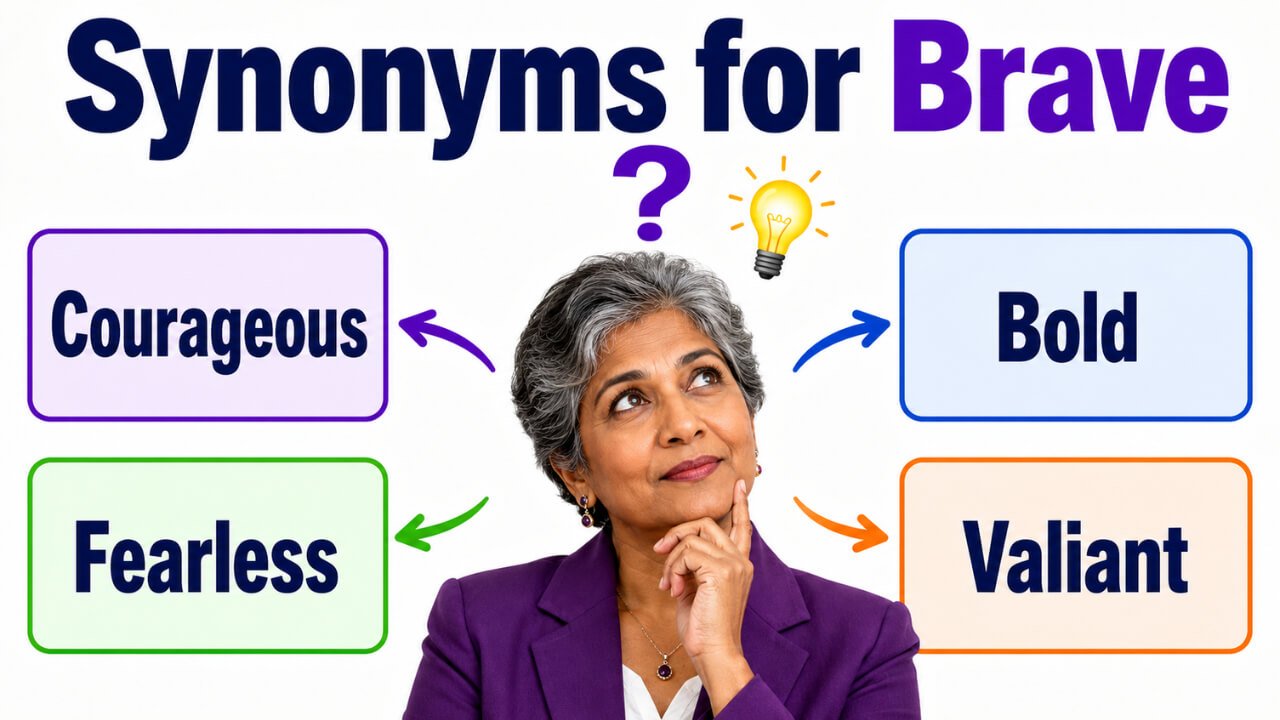
Quick Answer: The best synonyms for brave are courageous, fearless, bold, valiant, heroic, daring, gallant, resolute, undaunted, and lionhearted. Use courageous in formal writing, fearless for strong confidence, bold for action and speech, heroic for noble bravery, daring for risk taking, and resolute when someone stays firm under pressure. The keyword synonyms for brave helps writers choose the right word for courage, confidence, strength, risk, and moral firmness.
Pronunciation and Word Details
Word: Brave
Pronunciation: /breɪv/
Part of Speech: Adjective
Meaning: Ready to face fear, danger, pain, difficulty, or risk with courage.
US Pronunciation:
UK Pronunciation:
What Does “Brave” Mean?
Brave means ready to face fear, danger, difficulty, pain, or risk with courage. It is mainly used as an adjective to describe a person, action, decision, attitude, or response.
Example: She made a brave choice during a difficult moment.
Brave can describe physical courage, emotional strength, moral confidence, or a willingness to do something hard. It can appear before a noun, after a linking verb, or in phrases that describe behavior.
Before a Noun: He made a brave decision.
After a Verb: The child was brave at the hospital.
Describing Action: It was brave of her to speak honestly.
Meaning, Tone, and Context of “Brave”
Brave has a positive and respectful tone. It is common in everyday speech, storytelling, essays, speeches, reports, and emotional writing. The word is clear, simple, and widely understood.
Formal Context: The officer made a brave effort to protect the community.
Casual Context: You were brave to try something new.
Emotional Context: Her brave smile hid her sadness.
Academic Context: The character is brave because he acts despite fear.
Moral Context: It was brave to tell the truth.
Brave is not too formal or too casual. It works well in both conversation and writing. However, stronger synonyms such as heroic, valiant, and gallant can sound more dramatic, while bold, daring, and fearless can sound more energetic.
When and How to Use “Brave”
For Physical Courage: Use brave when someone faces danger, injury, pain, or a risky situation.
Example: The firefighter made a brave rescue.
For Emotional Strength: Use brave when someone handles fear, loss, pressure, or sadness with strength.
Example: She stayed brave during the hard days.
For Moral Courage: Use brave when someone does the right thing even when it is difficult.
Example: It was brave of him to admit the truth.
For Risk Taking: Use brave when someone tries something uncertain or challenging.
Example: Starting again after failure was a brave step.
For Praise: Use brave to compliment someone’s strength, honesty, or courage.
Example: That was a brave thing to say.
For Storytelling: Use brave to describe heroes, characters, actions, and important choices.
Example: The brave traveler crossed the dark forest.
Best Synonyms for Brave
Courageous: Having courage in the face of fear, danger, or difficulty.
Example: She was courageous enough to speak the truth.
Fearless: Showing no fear or very little fear.
Example: The fearless climber reached the peak.
Bold: Confident, strong, and willing to take risks.
Example: He made a bold decision to start over.
Valiant: Very brave, especially in a noble or difficult situation.
Example: The soldiers made a valiant effort.
Heroic: Extremely brave and noble.
Example: Her heroic actions saved many lives.
Daring: Willing to take risks or do something difficult.
Example: The team made a daring move in the final minutes.
Gallant: Brave, honorable, and noble.
Example: The gallant leader stood firm under pressure.
Resolute: Firm, determined, and not easily discouraged.
Example: She remained resolute during the crisis.
Undaunted: Not discouraged by danger, difficulty, or failure.
Example: He stayed undaunted after the setback.
Lionhearted: Very brave and strong in spirit.
Example: The lionhearted child faced surgery with a smile.
50 Synonyms for Brave with Short Meanings
- Courageous: Ready to face fear or danger.
- Fearless: Showing little or no fear.
- Bold: Confident and willing to take risks.
- Valiant: Nobly brave in difficulty or danger.
- Heroic: Extremely brave and noble.
- Daring: Ready to take risks.
- Gallant: Brave and honorable.
- Resolute: Firm and determined.
- Undaunted: Not discouraged by difficulty.
- Lionhearted: Very brave and strong.
- Intrepid: Fearless and adventurous.
- Gutsy: Informally brave and determined.
- Plucky: Cheerfully brave in trouble.
- Spirited: Full of energy and courage.
- Adventurous: Willing to try risky or new things.
- Confident: Sure and brave in action.
- Strong: Able to face difficulty with firmness.
- Steadfast: Loyal, firm, and brave.
- Determined: Unwilling to give up.
- Unshaken: Not disturbed by fear or pressure.
- Unflinching: Not backing away from danger.
- Unwavering: Firm and steady in courage.
- Stouthearted: Brave and strong in spirit.
- Dauntless: Not easily frightened.
- Audacious: Bold in a daring or risky way.
- Valorous: Showing great courage.
- Noble: Brave with honor and moral goodness.
- Hardy: Strong enough to face hardship.
- Tough: Able to handle difficulty.
- Tenacious: Holding firm despite problems.
- Committed: Brave because of strong dedication.
- Firm: Steady and not easily moved.
- Unafraid: Not afraid.
- Ready: Prepared to face a challenge.
- Nervy: Bold and brave in a risky situation.
- Game: Willing to try something difficult.
- Doughty: Brave and persistent.
- Stalwart: Loyal, strong, and dependable.
- Sturdy: Strong and steady under pressure.
- Fear defying: Acting despite fear.
- Risk taking: Willing to face possible danger.
- Battle ready: Prepared for difficulty or conflict.
- High spirited: Energetic and courageous.
- Self assured: Confident and steady.
- Strong willed: Determined and firm.
- Unyielding: Refusing to give in.
- Persistent: Continuing despite difficulty.
- Openhearted: Emotionally brave and sincere.
- Honorable: Brave in a morally good way.
- Courage filled: Full of courage.
Read Also:
Synonyms For Shown

Synonyms for Brave by Context
When Brave Means Courageous
Use these synonyms when someone faces fear, danger, pain, or difficulty with strength.
Synonyms: Courageous, valiant, heroic, gallant, valorous.
Example: She was brave during the emergency.
Better Option: She was courageous during the emergency.
When Brave Means Fearless
Use these synonyms when someone acts with little fear or does not seem afraid.
Synonyms: Fearless, dauntless, intrepid, unafraid, undaunted.
Example: The brave explorer entered the cave.
Better Option: The fearless explorer entered the cave.
When Brave Means Bold
Use these synonyms when someone takes a confident risk or acts with strong energy.
Synonyms: Bold, daring, audacious, gutsy, nervy.
Example: He made a brave move in the meeting.
Better Option: He made a bold move in the meeting.
When Brave Means Determined
Use these synonyms when someone stays firm despite pressure, fear, or difficulty.
Synonyms: Resolute, determined, steadfast, unwavering, tenacious.
Example: She stayed brave through every challenge.
Better Option: She stayed resolute through every challenge.
When Brave Means Noble
Use these synonyms when courage is connected to honor, kindness, sacrifice, or moral strength.
Synonyms: Heroic, gallant, noble, honorable, lionhearted.
Example: His brave actions helped the whole village.
Better Option: His heroic actions helped the whole village.
When Brave Means Emotionally Strong
Use these synonyms when someone faces sadness, fear, honesty, or vulnerability.
Synonyms: Strong, openhearted, unshaken, steady, courageous.
Example: It was brave of her to share her feelings.
Better Option: It was courageous of her to share her feelings.
Another Word for Brave
Best Single Replacement: The best single replacement for brave is courageous because it works in formal, casual, emotional, and general contexts. However, the best alternative depends on meaning. Use fearless for lack of fear, bold for confident action, heroic for noble courage, and resolute for firm determination.
Original: She was brave during the crisis.
Better Option: She was courageous during the crisis.
Original: He made a brave decision to speak up.
Better Option: He made a bold decision to speak up.
Original: The brave rescue saved three people.
Better Option: The heroic rescue saved three people.
Original: The team stayed brave after losing the first match.
Better Option: The team stayed resolute after losing the first match.
When Not to Use “Brave”
Do not use brave when a more specific word would make the meaning clearer. Brave can sound too general if you mean bold, fearless, heroic, determined, or honest.
Weak: She was brave in the report.
Better: She was honest in the report.
Weak: He gave a brave speech about the new idea.
Better: He gave a bold speech about the new idea.
Weak: The brave data showed a change.
Better: The important data showed a change.
Weak: The brave rescue was remembered by everyone.
Better: The heroic rescue was remembered by everyone.
Weak: She was brave because she never changed her decision.
Better: She was resolute because she never changed her decision.
Avoid brave when describing things that cannot show courage unless the meaning is figurative. A person can be brave. An action can be brave. A choice can be brave. A color, number, table, or ordinary object is usually not brave unless the sentence uses creative language.
Words Commonly Confused With Brave
Brave vs Courageous: Brave is simple and common. Courageous sounds slightly more formal and often fits essays, reports, speeches, and serious writing.
Brave vs Fearless: Brave means facing fear. Fearless means showing little or no fear.
Brave vs Bold: Brave focuses on courage. Bold focuses on confidence, risk, or strong action.
Brave vs Heroic: Brave can describe everyday courage. Heroic suggests great courage, sacrifice, or noble action.
Brave vs Daring: Brave can be moral, emotional, or physical. Daring usually means willing to take risks.
Brave vs Resolute: Brave means courageous. Resolute means firm and determined even under pressure.
Brave vs Reckless: Brave means courageous in a positive way. Reckless means careless about danger or consequences.
Which Synonym Should You Choose?
Choose courageous when writing formally about people, actions, choices, or moral strength.
Choose fearless when someone acts without visible fear or seems completely unafraid.
Choose bold when describing a confident decision, strong statement, or risky action.
Choose heroic when the action is noble, selfless, or unusually brave.
Choose daring when someone takes a risk or tries something adventurous.
Choose valiant when writing about noble effort, struggle, or courage in a serious situation.
Choose gallant when bravery is connected with honor, dignity, or noble behavior.
Choose resolute when someone stays firm and determined during pressure or difficulty.
Choose undaunted when someone continues without being discouraged by danger or failure.
Choose gutsy for casual speech when someone does something brave, bold, or impressive.
Real Life Examples of “Brave” in Sentences
Original: She was brave enough to tell the truth.
Better Option: She was courageous enough to tell the truth.
Original: He made a brave choice during the meeting.
Better Option: He made a bold choice during the meeting.
Original: The brave firefighter entered the burning building.
Better Option: The heroic firefighter entered the burning building.
Original: The brave child smiled before surgery.
Better Option: The lionhearted child smiled before surgery.
Original: They stayed brave after the loss.
Better Option: They stayed resolute after the loss.
Original: The brave traveler crossed the desert alone.
Better Option: The intrepid traveler crossed the desert alone.
Original: It was brave of her to try again.
Better Option: It was gutsy of her to try again.
Original: The brave soldiers protected the town.
Better Option: The valiant soldiers protected the town.
Original: He gave a brave answer under pressure.
Better Option: He gave an unflinching answer under pressure.
Original: Her brave attitude inspired the team.
Better Option: Her steadfast attitude inspired the team.
Synonym Groups and Usage Differences
Courage Group
This group describes general bravery in the face of fear, danger, or hardship.
Synonyms: Courageous, brave, valiant, valorous, dauntless.
Example: The courageous nurse stayed calm during the emergency.
Fearlessness Group
This group describes people who show little fear or continue despite danger.
Synonyms: Fearless, intrepid, unafraid, undaunted, dauntless.
Example: The fearless swimmer jumped into the cold water.
Bold Action Group
This group fits strong decisions, risky moves, and confident behavior.
Synonyms: Bold, daring, audacious, gutsy, nervy.
Example: Her bold idea changed the whole plan.
Determination Group
This group describes courage that stays firm over time.
Synonyms: Resolute, determined, steadfast, unwavering, tenacious.
Example: He remained resolute even when the task became harder.
Noble Bravery Group
This group connects bravery with honor, sacrifice, and goodness.
Synonyms: Heroic, gallant, noble, honorable, lionhearted.
Example: The heroic act protected many people.
Emotional Strength Group
This group describes courage in feelings, honesty, pain, and personal struggles.
Synonyms: Strong, openhearted, unshaken, steady, courageous.
Example: She was strong enough to forgive and move forward.
Antonyms of Brave
Cowardly: Lacking courage.
Fearful: Full of fear or anxiety.
Afraid: Feeling fear.
Timid: Shy, nervous, or easily frightened.
Weak: Lacking strength or firmness.
Fainthearted: Easily discouraged or frightened.
Spineless: Lacking courage or firmness.
Nervous: Worried or uneasy.
Hesitant: Slow to act because of doubt or fear.
Reckless: Carelessly risky rather than truly brave.
Cautious: Careful and unwilling to take risks.
Uncertain: Not confident or sure.
Comparison: Brave vs Related Words
Brave vs Courageous
Brave is simple and common. Courageous sounds more formal and serious.
Example With Brave: She was brave during the storm.
Example With Courageous: She was courageous during the storm.
Brave vs Fearless
Brave means acting despite fear. Fearless means showing little or no fear.
Example With Brave: He was brave even though he felt scared.
Example With Fearless: He seemed fearless in front of the crowd.
Brave vs Bold
Brave focuses on courage. Bold focuses on confidence and strong action.
Example With Brave: It was brave to defend a friend.
Example With Bold: It was bold to challenge the old rule.
Brave vs Heroic
Brave can describe everyday courage. Heroic describes great, noble, or selfless courage.
Example With Brave: The student made a brave choice.
Example With Heroic: The rescue worker made a heroic choice.
Brave vs Daring
Brave can be emotional, moral, or physical. Daring often means taking a risk.
Example With Brave: She was brave to speak honestly.
Example With Daring: She made a daring jump across the stream.
Brave vs Reckless
Brave is positive and thoughtful courage. Reckless means careless risk without good judgment.
Example With Brave: It was brave to help during the emergency.
Example With Reckless: It was reckless to ignore the warning signs.
Common Phrases and Expressions With Brave
Brave Heart: A person with courage and inner strength.
Brave Soul: A person who faces difficulty with courage.
Brave Decision: A choice made despite fear or risk.
Brave Attempt: An effort made with courage.
Brave Face: A calm or strong expression during trouble.
Brave Enough: Having enough courage to do something difficult.
Brave Action: An act done with courage.
Brave Choice: A decision that requires strength.
Brave Words: Honest or strong words said with courage.
Brave Spirit: A strong and courageous attitude.
Common Mistakes to Avoid
Using brave for every positive action: Brave should involve fear, risk, difficulty, pain, or moral strength.
Weak: She made a brave sandwich.
Better: She made a creative sandwich.
Confusing brave with reckless: Brave actions have courage and purpose. Reckless actions ignore danger carelessly.
Weak: He was brave to drive too fast in heavy rain.
Better: He was reckless to drive too fast in heavy rain.
Repeating brave too often: Repetition can make writing dull. Use courageous, bold, heroic, or resolute when the context fits.
Weak: The brave girl made a brave choice and stayed brave.
Better: The courageous girl made a bold choice and stayed resolute.
Using fearless when fear is present: If someone feels fear but acts anyway, brave or courageous is usually better than fearless.
Weak: She was fearless even though she was scared.
Better: She was brave even though she was scared.
Choosing heroic for ordinary courage: Heroic is strong and should be used for noble, selfless, or extraordinary bravery.
Weak: He made a heroic phone call to ask a question.
Better: He made a bold phone call to ask a question.
Conclusion
The keyword synonyms for brave includes many strong alternatives for courage, confidence, risk, and moral strength. Use courageous for general and formal writing, fearless when someone shows no fear, bold for confident action, heroic for noble bravery, daring for risk taking, and resolute for steady determination. The best synonym depends on the situation, so choose the word that shows the exact kind of bravery you want to describe.
FAQs About Synonyms for Brave
What is the best synonym for brave?
Answer: The best general synonym for brave is courageous because it works in formal, casual, emotional, and everyday writing.
What are strong synonyms for brave?
Answer: Strong synonyms for brave include fearless, heroic, valiant, dauntless, lionhearted, and gallant.
What is another word for brave in formal writing?
Answer: In formal writing, use courageous, valiant, resolute, undaunted, or heroic depending on the context.
What is a casual synonym for brave?
Answer: Casual synonyms for brave include bold, gutsy, plucky, game, and nervy.
Is brave the same as fearless?
Answer: No. Brave means acting despite fear. Fearless means showing little or no fear.
What is the opposite of brave?
Answer: Common opposites of brave include cowardly, fearful, timid, afraid, and fainthearted.
Can brave describe a decision?
Answer: Yes. Brave can describe a decision when the choice involves fear, risk, honesty, difficulty, or moral strength.
