
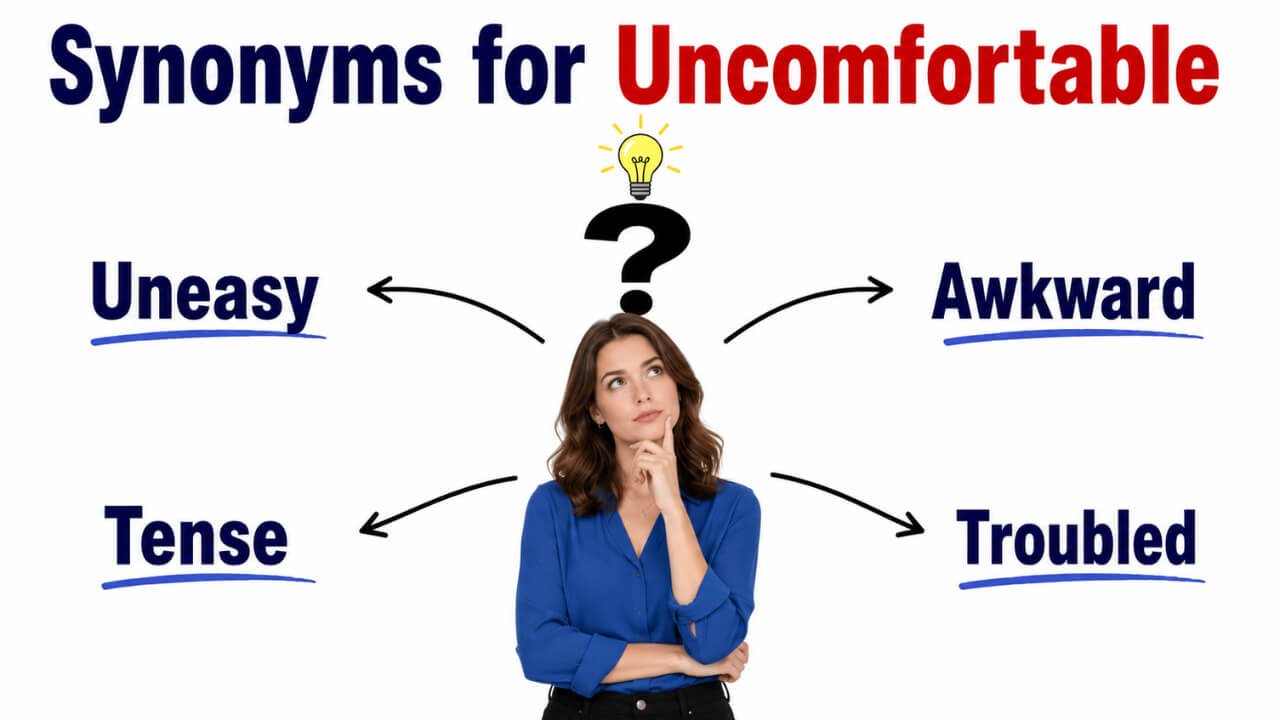
Quick Answer: The best synonyms for uncomfortable are uneasy, awkward, anxious, tense, restless, unsettled, embarrassed, painful, unpleasant, and inconvenient. These synonyms for uncomfortable depend on the situation. Use uneasy for worry or nervousness, awkward for social discomfort, anxious for fear or concern, tense for stress, painful for physical discomfort, unpleasant for a bad experience, and inconvenient for something that causes difficulty or trouble.
Pronunciation and Word Details
Word: Uncomfortable.
Pronunciation: /ʌnˈkʌm.fər.tə.bəl/.
Part of Speech: Adjective.
Meaning: Uncomfortable means causing physical pain, emotional unease, social awkwardness, or difficulty.
US Pronunciation:
UK Pronunciation:
What Does “Uncomfortable” Mean?
Uncomfortable means not feeling relaxed, easy, safe, or physically at ease. It is an adjective used to describe physical discomfort, emotional tension, social awkwardness, or a situation that feels unpleasant.
The word can describe a chair, a conversation, a memory, a question, a silence, or a feeling. For example, an uncomfortable seat causes physical discomfort. An uncomfortable question causes emotional or social discomfort. The meaning changes slightly depending on the sentence context.
Meaning, Tone, and Context of “Uncomfortable”
Uncomfortable is a neutral and common word. It is suitable for formal writing, casual speech, essays, reports, conversations, and everyday descriptions. It is not rude, but it can describe sensitive feelings politely.
The tone can be physical, emotional, social, or practical. In health or body related contexts, uncomfortable means painful, sore, tight, or irritating. In social contexts, it means awkward, tense, or embarrassing. In emotional contexts, it means uneasy, anxious, unsettled, or distressed. In practical contexts, it means inconvenient, difficult, or unpleasant.
When and How to Use “Uncomfortable”
For Physical Discomfort: Use uncomfortable when something causes pain, pressure, tightness, soreness, heat, cold, or irritation.
Example: The shoes were uncomfortable after a long walk.
For Emotional Unease: Use uncomfortable when a person feels worried, nervous, tense, or unsettled.
Example: She felt uncomfortable during the serious discussion.
For Social Awkwardness: Use uncomfortable when a situation feels embarrassing, strange, or difficult to handle.
Example: The long silence made everyone uncomfortable.
For Difficult Situations: Use uncomfortable when a topic, question, or decision creates pressure or discomfort.
Example: The manager asked an uncomfortable question.
For Practical Trouble: Use uncomfortable when something is inconvenient, unsuitable, or hard to deal with.
Example: The meeting time was uncomfortable for the team.
Best Synonyms for Uncomfortable
Uneasy: Feeling worried, nervous, or not relaxed.
Example: He felt uneasy before the interview.
Awkward: Socially difficult, strange, or embarrassing.
Example: The conversation became awkward after the mistake.
Anxious: Worried or nervous about something that may happen.
Example: She was anxious about the results.
Tense: Filled with stress, pressure, or nervous energy.
Example: The room felt tense during the argument.
Restless: Unable to relax or stay still.
Example: He felt restless while waiting for the call.
Unsettled: Emotionally disturbed or not calm.
Example: The news left her feeling unsettled.
Embarrassed: Feeling ashamed, shy, or socially exposed.
Example: He looked embarrassed after the comment.
Painful: Causing physical or emotional pain.
Example: The chair was painful to sit on for hours.
Unpleasant: Not enjoyable, comfortable, or nice.
Example: The room had an unpleasant smell.
Inconvenient: Causing difficulty, trouble, or practical discomfort.
Example: The delay was inconvenient for everyone.
50 Synonyms for Uncomfortable with Short Meanings
- Uneasy: Worried or not relaxed.
- Awkward: Socially difficult or embarrassing.
- Anxious: Nervous about something uncertain.
- Tense: Full of stress or pressure.
- Restless: Unable to relax or stay still.
- Unsettled: Disturbed or not calm.
- Distressed: Deeply upset or troubled.
- Troubled: Worried or emotionally disturbed.
- Embarrassed: Ashamed or socially exposed.
- Self conscious: Uneasy because of attention or judgment.
- Ill at ease: Not relaxed or comfortable.
- Strained: Tense, difficult, or forced.
- Nervous: Worried or fearful.
- Worried: Concerned about a problem.
- Apprehensive: Nervous about something future.
- Agitated: Upset, restless, or disturbed.
- Disturbed: Emotionally bothered or unsettled.
- Disquieted: Made anxious or uneasy.
- Unnerved: Made nervous or afraid.
- Flustered: Confused, nervous, or embarrassed.
- Fidgety: Restless in body movement.
- Edgy: Nervous, tense, or irritable.
- Awkward feeling: A socially uneasy feeling.
- Embarrassing: Causing social discomfort.
- Cringe worthy: Causing embarrassment or discomfort.
- Painful: Causing physical or emotional pain.
- Sore: Aching or physically tender.
- Aching: Having steady pain.
- Cramped: Tight, crowded, or restricted.
- Stiff: Not flexible or physically relaxed.
- Tight: Pressing against the body.
- Scratchy: Rough and irritating to the skin.
- Irritating: Causing annoyance or discomfort.
- Bothersome: Annoying or troublesome.
- Unpleasant: Not enjoyable or agreeable.
- Disagreeable: Unpleasant or not acceptable.
- Distasteful: Unpleasant or offensive.
- Harsh: Rough, severe, or unpleasant.
- Oppressive: Heavy, difficult, or uncomfortable.
- Stifling: Too hot, restrictive, or hard to bear.
- Suffocating: Making breathing or freedom feel limited.
- Inconvenient: Causing trouble or difficulty.
- Difficult: Hard to manage or handle.
- Troublesome: Causing problems or discomfort.
- Unwelcome: Not wanted or pleasant.
- Unsettling: Making someone feel uneasy.
- Discomforting: Causing discomfort or worry.
- Worrisome: Causing concern or anxiety.
- Sensitive: Delicate, difficult, or emotionally risky.
- Vulnerable: Feeling exposed or not protected.
Read Also:
Synonyms for Dramatic

Synonyms for Uncomfortable by Context
When Uncomfortable Means Uneasy
Use these synonyms when uncomfortable describes worry, nervousness, inner tension, or emotional unease.
Synonyms: Uneasy, anxious, nervous, apprehensive, unsettled.
Example: He felt uncomfortable before the exam.
Better Option: He felt anxious before the exam.
When Uncomfortable Means Awkward
Use these synonyms when uncomfortable describes a social moment, embarrassing silence, strange conversation, or difficult interaction.
Synonyms: Awkward, embarrassing, strained, self conscious, ill at ease.
Example: The room became uncomfortable after the argument.
Better Option: The room became awkward after the argument.
When Uncomfortable Means Physically Painful
Use these synonyms when uncomfortable describes body pain, pressure, soreness, tight clothing, poor seating, or physical irritation.
Synonyms: Painful, sore, aching, cramped, stiff.
Example: The chair was uncomfortable.
Better Option: The chair was painful to sit in.
When Uncomfortable Means Unpleasant
Use these synonyms when uncomfortable describes a bad experience, harsh condition, unpleasant place, or difficult environment.
Synonyms: Unpleasant, disagreeable, harsh, oppressive, stifling.
Example: The weather made the trip uncomfortable.
Better Option: The weather made the trip unpleasant.
When Uncomfortable Means Inconvenient
Use these synonyms when uncomfortable describes practical difficulty, poor timing, unsuitable conditions, or trouble.
Synonyms: Inconvenient, difficult, troublesome, bothersome, unwelcome.
Example: The new schedule is uncomfortable for many workers.
Better Option: The new schedule is inconvenient for many workers.
Another Word for Uncomfortable
Another word for uncomfortable is uneasy when the meaning is emotional discomfort or nervousness. However, the best replacement depends on the context. Use awkward for social discomfort, painful for physical discomfort, unpleasant for a bad experience, and inconvenient for practical difficulty.
Original: I felt uncomfortable during the meeting.
Better Option: I felt uneasy during the meeting.
Original: The silence was uncomfortable.
Better Option: The silence was awkward.
Original: These shoes are uncomfortable.
Better Option: These shoes are painful to wear.
Original: The appointment time is uncomfortable for me.
Better Option: The appointment time is inconvenient for me.
When Not to Use “Uncomfortable”
Do not use uncomfortable when a more specific word gives a clearer meaning. If you mean pain, use painful, sore, tight, or cramped. If you mean embarrassment, use awkward or embarrassing. If you mean worry, use anxious or uneasy. If you mean a practical problem, use inconvenient.
Weak: The question was uncomfortable.
Better: The question was awkward.
Weak: My back feels uncomfortable.
Better: My back feels sore.
Weak: The delay was uncomfortable.
Better: The delay was inconvenient.
Weak: She looked uncomfortable before the speech.
Better: She looked nervous before the speech.
Words Commonly Confused With Uncomfortable
Uncomfortable vs Uneasy: Uncomfortable is broader and can describe physical, emotional, social, or practical discomfort. Uneasy mainly describes worry, fear, or emotional tension.
Uncomfortable vs Awkward: Uncomfortable can describe many kinds of discomfort. Awkward usually describes social difficulty, embarrassment, or strange interaction.
Uncomfortable vs Painful: Uncomfortable can be mild or general. Painful is stronger and means actual physical or emotional pain.
Uncomfortable vs Inconvenient: Uncomfortable often describes how someone feels. Inconvenient describes difficulty, poor timing, or practical trouble.
Uncomfortable vs Embarrassed: Uncomfortable can mean not relaxed for many reasons. Embarrassed means feeling ashamed, shy, or socially exposed.
Uncomfortable vs Anxious: Uncomfortable can be physical or emotional. Anxious means worried, nervous, or afraid about something.
Which Synonym Should You Choose?
Choose uneasy when writing about worry, doubt, fear, or inner discomfort.
Choose awkward when writing about social tension, strange moments, silence, or embarrassment.
Choose anxious when describing nervousness about a future event, result, or decision.
Choose tense when describing pressure, conflict, stress, or a serious atmosphere.
Choose painful when describing physical discomfort, soreness, injury, or emotional hurt.
Choose unpleasant when describing a bad experience, smell, place, memory, or condition.
Choose inconvenient when writing about poor timing, practical trouble, or an unsuitable arrangement.
Choose embarrassed when the discomfort comes from shame, attention, or social exposure.
Choose restless when someone cannot relax, sit still, or feel settled.
Choose unsettled when a person feels emotionally disturbed or not calm.
Real Life Examples of “Uncomfortable” in Sentences
Original: The chair was uncomfortable after one hour.
Better Option: The chair was painful after one hour.
Original: I felt uncomfortable answering that question.
Better Option: I felt uneasy answering that question.
Original: The dinner became uncomfortable after the argument.
Better Option: The dinner became awkward after the argument.
Original: She looked uncomfortable before the test.
Better Option: She looked anxious before the test.
Original: His tight jacket was uncomfortable.
Better Option: His tight jacket was restrictive.
Original: The silence made everyone uncomfortable.
Better Option: The silence made everyone tense.
Original: The long wait was uncomfortable.
Better Option: The long wait was inconvenient.
Original: He felt uncomfortable in the crowded room.
Better Option: He felt uneasy in the crowded room.
Original: The bed was uncomfortable for guests.
Better Option: The bed was stiff for guests.
Original: The topic made the group uncomfortable.
Better Option: The topic made the group uneasy.
Synonym Groups and Usage Differences
Emotional Discomfort Group
This group fits worry, fear, concern, nervousness, and inner tension. Use it when the discomfort is mostly felt inside the mind.
Synonyms: Uneasy, anxious, nervous, apprehensive, unsettled.
Example: She felt uneasy about the sudden change.
Social Awkwardness Group
This group works best for conversations, meetings, silence, mistakes, and embarrassing moments.
Synonyms: Awkward, embarrassing, strained, self conscious, ill at ease.
Example: His comment created an awkward moment.
Physical Discomfort Group
This group fits body pain, tight clothes, bad seating, sore muscles, and irritating textures.
Synonyms: Painful, sore, aching, cramped, stiff.
Example: The cramped seat made the flight difficult.
Practical Difficulty Group
This group is useful when uncomfortable means hard to manage or unsuitable.
Synonyms: Inconvenient, difficult, troublesome, bothersome, unwelcome.
Example: The late change was inconvenient for the staff.
Unpleasant Experience Group
This group describes situations, places, weather, smells, sounds, or conditions that are not enjoyable.
Synonyms: Unpleasant, disagreeable, harsh, oppressive, stifling.
Example: The room felt stifling without fresh air.
Antonyms of Uncomfortable
Comfortable: Relaxed, pleasant, or physically at ease.
Relaxed: Calm and free from tension.
Easy: Not difficult or stressful.
Pleasant: Nice, enjoyable, or agreeable.
Convenient: Suitable, easy, or not troublesome.
Calm: Peaceful and not nervous.
Confident: Sure and not uneasy.
Secure: Safe and protected.
At ease: Relaxed and comfortable.
Soothing: Giving comfort or relief.
Pain free: Without pain or physical discomfort.
Settled: Calm, stable, and not disturbed.
Comparison: Uncomfortable vs Related Words
Uncomfortable vs Uneasy
Uncomfortable is a general word for physical, emotional, social, or practical discomfort. Uneasy usually means worried or emotionally unsettled.
Example With Uncomfortable: I felt uncomfortable in the hard chair.
Example With Uneasy: I felt uneasy about the strange noise.
Uncomfortable vs Awkward
Uncomfortable can describe many kinds of discomfort. Awkward describes social discomfort, strange behavior, or difficult interaction.
Example With Uncomfortable: The room was too hot and uncomfortable.
Example With Awkward: The conversation became awkward after the joke.
Uncomfortable vs Painful
Uncomfortable can mean mild discomfort. Painful is stronger and describes real pain.
Example With Uncomfortable: These shoes feel uncomfortable.
Example With Painful: These shoes are painful after a long walk.
Uncomfortable vs Anxious
Uncomfortable may describe body, mood, or situation. Anxious focuses on worry, fear, or nervous expectation.
Example With Uncomfortable: He felt uncomfortable during the meeting.
Example With Anxious: He felt anxious before the meeting began.
Uncomfortable vs Inconvenient
Uncomfortable often describes a feeling. Inconvenient describes a practical problem with time, place, plan, or arrangement.
Example With Uncomfortable: The silence was uncomfortable.
Example With Inconvenient: The early appointment was inconvenient.
Common Phrases and Expressions With Uncomfortable
Uncomfortable Feeling: A sense of unease, worry, pain, or awkwardness.
Uncomfortable Situation: A moment or condition that feels difficult or unpleasant.
Uncomfortable Silence: A quiet moment that feels awkward or tense.
Uncomfortable Question: A question that feels difficult, personal, or embarrassing.
Uncomfortable Truth: A fact that is hard to accept.
Uncomfortable Chair: A chair that causes physical discomfort.
Uncomfortable Shoes: Shoes that hurt, press, or irritate the feet.
Uncomfortable Conversation: A discussion that feels awkward, tense, or sensitive.
Uncomfortable Position: A body position or life situation that feels difficult.
Uncomfortable Memory: A memory that creates unease, shame, or emotional discomfort.
Common Mistakes to Avoid
A common mistake is using uncomfortable for every type of bad feeling. The word is useful, but it can become vague when repeated too often. Use uneasy for worry, awkward for social tension, painful for body discomfort, and inconvenient for practical problems.
Another mistake is confusing uncomfortable with inconvenient. A chair is uncomfortable because it affects the body. A schedule is inconvenient because it creates trouble. Also avoid using uncomfortable when the meaning is too strong. If someone is deeply upset, distressed may be more accurate.
Conclusion
Synonyms for uncomfortable help you describe physical pain, emotional unease, social awkwardness, and practical difficulty with more accuracy. Use uneasy for worry, awkward for strange social moments, anxious for nervous expectation, painful for body discomfort, unpleasant for bad experiences, and inconvenient for troublesome arrangements. The best synonym depends on what kind of discomfort you mean. Choosing the right word makes your writing clearer, more natural, and more helpful for readers.
FAQs About Synonyms for Uncomfortable
What are the best synonyms for uncomfortable?
The best synonyms for uncomfortable are uneasy, awkward, anxious, tense, restless, unsettled, embarrassed, painful, unpleasant, and inconvenient.
What is another word for uncomfortable feeling?
Another word for an uncomfortable feeling is unease. You can also use anxiety, nervousness, tension, or discomfort.
What is a formal synonym for uncomfortable?
A formal synonym for uncomfortable is uneasy. In reports or essays, you can also use unsettled, anxious, strained, or inconvenient.
What is a casual synonym for uncomfortable?
A casual synonym for uncomfortable is awkward. People often use awkward for strange, tense, or embarrassing social moments.
What is another word for physically uncomfortable?
Another word for physically uncomfortable is painful. Depending on the sentence, you can also use sore, aching, cramped, stiff, or tight.
What is the difference between uncomfortable and awkward?
Uncomfortable is broader and can describe physical, emotional, or practical discomfort. Awkward mainly describes social discomfort or embarrassment.
What is the opposite of uncomfortable?
The opposite of uncomfortable is comfortable. Other antonyms include relaxed, easy, pleasant, calm, convenient, secure, and at ease.
