
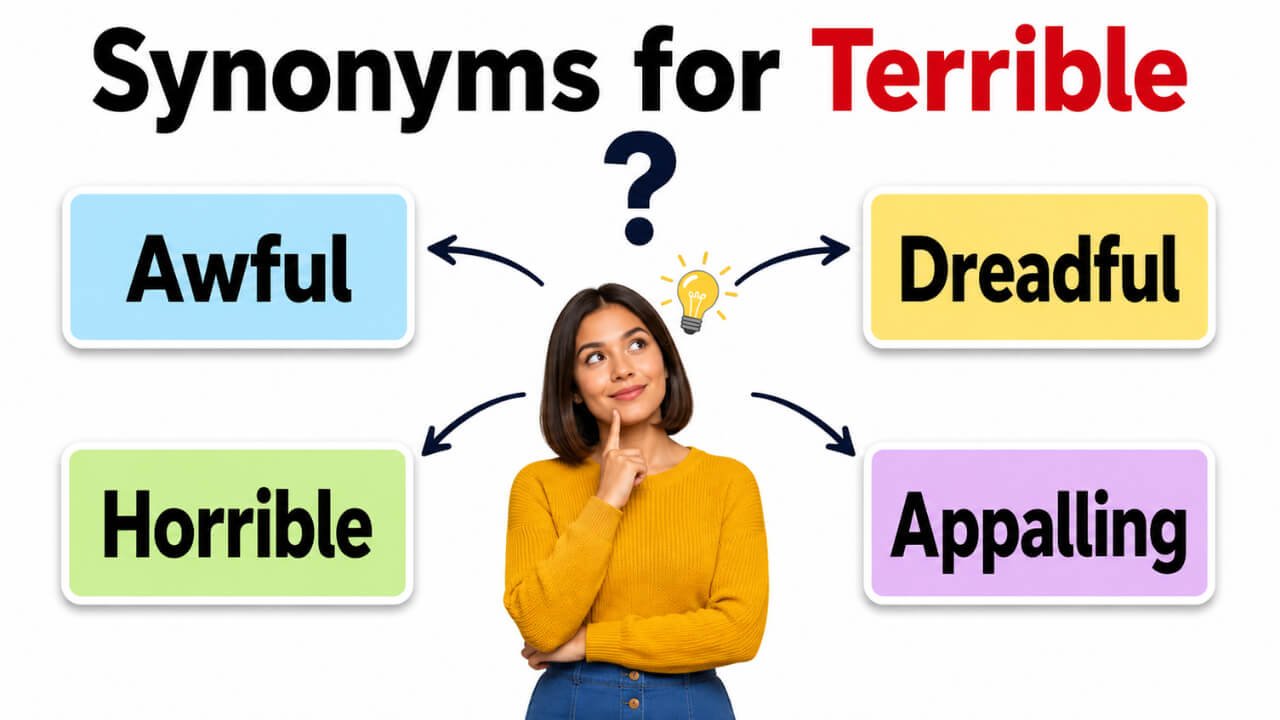
Quick Answer: Synonyms for terrible include awful, dreadful, horrible, appalling, atrocious, disastrous, dreadful, poor, unpleasant, and unbearable. Use awful or horrible in casual speech, appalling in formal writing, atrocious for extremely bad quality or behavior, disastrous for serious results, dreadful for fear or discomfort, poor for mild criticism, and unbearable when something is too painful, stressful, or difficult to accept.
Pronunciation and Word Details
Word: Terrible
Pronunciation: /ˈterəbl/
Part of Speech: Adjective
Meaning: Very bad, unpleasant, serious, frightening, or difficult to accept.
US Pronunciation:
UK Pronunciation:
What Does “Terrible” Mean?
Terrible means very bad, unpleasant, frightening, serious, or hard to deal with. It is an adjective used to describe people, situations, experiences, results, feelings, conditions, behavior, quality, or events.
The word terrible can describe something emotionally painful, physically uncomfortable, morally wrong, badly made, or extremely disappointing. For example, a terrible accident is serious, a terrible meal is very bad, a terrible mistake causes problems, and terrible pain is intense. The exact meaning depends on the sentence context.
Meaning, Tone, and Context of “Terrible”
Terrible is a strong negative word. It is common in casual speech, everyday writing, reviews, stories, personal messages, and emotional descriptions. It can sound conversational when used for small problems, but it can also sound serious when describing danger, loss, pain, or disaster.
The tone of terrible is usually emotional and critical. It is stronger than bad but less formal than appalling or atrocious. In academic, business, or professional writing, terrible may sound too general, so words like poor, severe, harmful, unacceptable, or disastrous may be clearer. In conversation, terrible works naturally for feelings, experiences, mistakes, weather, news, service, pain, and behavior.
When and How to Use “Terrible”
For Poor Quality: Use terrible when something is badly made, badly done, or disappointing.
Example: The service at the restaurant was terrible.
For Serious Problems: Use terrible when a situation causes major harm, loss, or difficulty.
Example: The storm caused terrible damage across the town.
For Strong Emotions: Use terrible when describing sadness, fear, guilt, regret, or shock.
Example: She felt terrible after hearing the news.
For Physical Discomfort: Use terrible when pain, weather, noise, or illness feels very unpleasant.
Example: He had a terrible headache all morning.
For Bad Behavior: Use terrible when someone acts in a cruel, careless, rude, or unacceptable way.
Example: It was terrible behavior during an important meeting.
Best Synonyms for Terrible
Awful: Very bad or unpleasant.
Example: The traffic was awful this morning.
Horrible: Very unpleasant, shocking, or upsetting.
Example: We heard horrible news yesterday.
Dreadful: Very bad, frightening, or uncomfortable.
Example: The room was in dreadful condition.
Appalling: Shockingly bad or unacceptable.
Example: The lack of safety was appalling.
Atrocious: Extremely bad, cruel, or poor in quality.
Example: The writing in the report was atrocious.
Disastrous: Causing great damage, failure, or trouble.
Example: The decision had disastrous results.
Unpleasant: Not enjoyable, comfortable, or nice.
Example: The conversation became unpleasant quickly.
Poor: Low in quality or below the expected standard.
Example: The project received poor feedback.
Unbearable: Too painful, stressful, or unpleasant to accept.
Example: The heat became unbearable by noon.
Severe: Very serious, intense, or harmful.
Example: The company faced severe criticism.
50 Synonyms for Terrible with Short Meanings
- Awful: Very bad or unpleasant.
- Horrible: Very upsetting, shocking, or unpleasant.
- Dreadful: Extremely bad, frightening, or uncomfortable.
- Appalling: Shockingly bad or unacceptable.
- Atrocious: Extremely bad, cruel, or poor.
- Disastrous: Causing major failure or damage.
- Unpleasant: Not enjoyable or comfortable.
- Poor: Low in quality or standard.
- Unbearable: Too difficult or painful to tolerate.
- Severe: Very serious, intense, or harmful.
- Dire: Extremely serious or urgent.
- Ghastly: Shockingly bad or frightening.
- Grim: Serious, unpleasant, or worrying.
- Nasty: Unpleasant, mean, or offensive.
- Vile: Extremely unpleasant, immoral, or disgusting.
- Hideous: Very ugly, unpleasant, or shocking.
- Horrific: Extremely frightening or shocking.
- Shocking: Very surprising and upsetting.
- Distressing: Causing worry, sadness, or pain.
- Painful: Causing physical or emotional suffering.
- Miserable: Very unhappy, uncomfortable, or unpleasant.
- Bleak: Lacking hope, warmth, or comfort.
- Wretched: Very poor, unhappy, or unpleasant.
- Abysmal: Extremely bad in quality or performance.
- Lousy: Very bad, poor, or disappointing.
- Rotten: Bad, spoiled, unfair, or unpleasant.
- Inferior: Lower in quality or value.
- Defective: Not working correctly or properly made.
- Flawed: Having mistakes, weaknesses, or problems.
- Faulty: Not correct, reliable, or properly working.
- Unacceptable: Not good enough or not suitable.
- Harmful: Causing damage, pain, or problems.
- Damaging: Causing negative effects or harm.
- Dangerous: Likely to cause injury, risk, or trouble.
- Frightening: Causing fear or alarm.
- Fearful: Causing fear, worry, or concern.
- Alarming: Causing sudden worry or fear.
- Cruel: Causing pain without kindness or care.
- Harsh: Severe, rough, or unkind.
- Brutal: Extremely harsh, violent, or painful.
- Tragic: Very sad and serious.
- Devastating: Causing great damage or emotional pain.
- Catastrophic: Extremely harmful or disastrous.
- Ruinous: Causing ruin, loss, or serious damage.
- Regrettable: Causing disappointment, sadness, or regret.
- Depressing: Making someone feel sad or hopeless.
- Discouraging: Making someone lose hope or confidence.
- Troubling: Causing worry or concern.
- Offensive: Rude, insulting, or unpleasant.
- Repulsive: Extremely unpleasant or disgusting.
Read Also:
Synonyms for Safe

Synonyms for Terrible by Context
When Terrible Means Very Bad
Use these words when terrible describes poor quality, bad results, or a disappointing experience.
Awful: The food tasted awful.
Poor: The report showed poor planning.
Lousy: He gave a lousy excuse for being late.
Abysmal: The team gave an abysmal performance.
When Terrible Means Shocking or Unacceptable
Use these words when terrible describes something morally wrong, deeply disappointing, or hard to excuse.
Appalling: The working conditions were appalling.
Atrocious: His behavior at dinner was atrocious.
Unacceptable: The delay was completely unacceptable.
Vile: The comment was vile and unnecessary.
When Terrible Means Serious or Harmful
Use these words when terrible describes damage, danger, loss, or strong consequences.
Severe: The city faced severe flooding.
Dire: The patient was in dire condition.
Disastrous: The error had disastrous effects.
Catastrophic: The fire caused catastrophic damage.
When Terrible Means Frightening
Use these words when terrible describes fear, shock, horror, or danger.
Horrible: They heard a horrible sound outside.
Horrific: The accident was horrific.
Frightening: The dark road felt frightening.
Alarming: The sudden warning was alarming.
When Terrible Means Painful or Uncomfortable
Use these words when terrible describes pain, stress, sadness, illness, or discomfort.
Unbearable: The noise became unbearable.
Painful: It was a painful memory.
Miserable: She felt miserable all weekend.
Distressing: The letter contained distressing news.
Another Word for Terrible
The best single replacement for terrible is awful because it is natural, common, and useful in many everyday contexts. However, the best alternative depends on meaning. Use appalling for formal criticism, disastrous for serious results, severe for intensity, and unbearable for pain or discomfort.
Original: The weather was terrible today.
Better Option: The weather was awful today.
Original: The company made a terrible decision.
Better Option: The company made a disastrous decision.
Original: The hotel room was terrible.
Better Option: The hotel room was dreadful.
Original: His comments were terrible.
Better Option: His comments were appalling.
When Not to Use “Terrible”
Do not use terrible when a more exact word would make the sentence clearer. Terrible can sound vague if the reader does not know whether you mean poor quality, serious harm, emotional pain, fear, or discomfort. In formal writing, terrible may sound too casual or emotional.
Weak: The test results were terrible.
Better: The test results were poor.
Weak: The accident was terrible.
Better: The accident was severe.
Weak: The smell was terrible.
Better: The smell was repulsive.
Weak: The policy had terrible effects.
Better: The policy had damaging effects.
Words Commonly Confused With Terrible
Terrible vs Awful: Terrible and awful are very similar, but awful is more common in casual speech. Terrible can sound slightly stronger or more serious.
Terrible vs Horrible: Horrible often suggests shock, fear, disgust, or emotional upset. Terrible can describe any very bad situation, quality, or feeling.
Terrible vs Dreadful: Dreadful can mean very bad, but it often has a stronger sense of fear, discomfort, or gloom.
Terrible vs Appalling: Appalling means shockingly bad or unacceptable. It is stronger and more formal than terrible.
Terrible vs Atrocious: Atrocious describes something extremely bad, cruel, or badly done. It is stronger than terrible in many contexts.
Terrible vs Severe: Severe focuses on seriousness or intensity. Terrible is broader and more emotional.
Terrible vs Poor: Poor is milder and more formal. Terrible is stronger and more emotional.
Which Synonym Should You Choose?
Choose awful for casual speech about bad experiences, weather, service, or feelings.
Choose horrible when something is upsetting, frightening, disgusting, or emotionally painful.
Choose dreadful when describing fear, discomfort, or a very unpleasant situation.
Choose appalling when writing formal criticism about shocking behavior, conditions, or standards.
Choose atrocious when the quality, behavior, or result is extremely bad.
Choose disastrous when a decision, event, or mistake causes serious negative results.
Choose poor when writing politely or professionally about low quality or weak performance.
Choose severe when describing serious damage, pain, illness, punishment, or consequences.
Choose unbearable when something is too painful, stressful, loud, hot, or difficult to tolerate.
Choose harmful when the focus is damage, danger, or negative effect.
Real Life Examples of “Terrible” in Sentences
Original: The meal was terrible.
Better Option: The meal was awful.
Original: She made a terrible mistake.
Better Option: She made a serious mistake.
Original: The news was terrible.
Better Option: The news was distressing.
Original: His behavior was terrible.
Better Option: His behavior was appalling.
Original: The project had terrible results.
Better Option: The project had disastrous results.
Original: I had a terrible headache.
Better Option: I had a severe headache.
Original: The room smelled terrible.
Better Option: The room smelled repulsive.
Original: The movie was terrible.
Better Option: The movie was dreadful.
Original: The heat was terrible.
Better Option: The heat was unbearable.
Original: The service was terrible.
Better Option: The service was poor.
Synonym Groups and Usage Differences
Quality Group
These synonyms describe low standards, weak performance, or badly made things. Poor, awful, lousy, abysmal, defective, flawed, and faulty are useful for reviews, reports, products, services, and performance.
Example: The phone had a faulty battery.
Seriousness Group
These words describe major problems, strong consequences, and harmful situations. Severe, dire, disastrous, catastrophic, ruinous, and damaging are best for formal or serious contexts.
Example: The mistake caused severe delays.
Emotion Group
These synonyms describe sadness, pain, shock, or emotional discomfort. Distressing, painful, miserable, depressing, tragic, and devastating are useful when the focus is feeling.
Example: The loss was deeply distressing.
Fear Group
These words describe frightening or shocking situations. Horrible, horrific, frightening, alarming, fearful, and ghastly work well for fear, danger, or horror.
Example: The sudden scream was frightening.
Moral Criticism Group
These synonyms describe behavior, words, actions, or choices that seem wrong, cruel, rude, or unacceptable. Appalling, atrocious, vile, cruel, harsh, brutal, and offensive are strong choices.
Example: His cruel remark upset the whole room.
Antonyms of Terrible
The opposite of terrible depends on the meaning. If terrible means very bad, the opposite may be excellent. If it means frightening, the opposite may be comforting. If it means painful, the opposite may be pleasant.
Excellent: Extremely good or high quality.
Wonderful: Very good, pleasing, or enjoyable.
Great: Very good or impressive.
Pleasant: Nice, comfortable, or enjoyable.
Lovely: Attractive, kind, or enjoyable.
Comforting: Making someone feel calmer or safer.
Encouraging: Giving hope or confidence.
Acceptable: Good enough or suitable.
Fine: Good enough or satisfactory.
Harmless: Not causing damage, pain, or danger.
Mild: Not strong, serious, or severe.
Impressive: Creating admiration or respect.
Comparison: Terrible vs Related Words
Terrible vs Awful
Terrible and awful both mean very bad, but awful is often more casual. Terrible can be used for both everyday problems and serious situations.
Example With Terrible: The storm caused terrible damage.
Example With Awful: The traffic was awful after work.
Terrible vs Horrible
Horrible often adds a feeling of shock, fear, disgust, or emotional pain. Terrible is broader and can describe quality, results, feelings, or events.
Example With Terrible: The service was terrible.
Example With Horrible: The story had a horrible ending.
Terrible vs Appalling
Appalling is more formal and usually means shockingly bad or unacceptable. Terrible is more general and common in everyday speech.
Example With Terrible: The room was in terrible condition.
Example With Appalling: The safety standards were appalling.
Terrible vs Severe
Severe describes seriousness, intensity, or harshness. Terrible gives a broader negative judgment.
Example With Terrible: He had a terrible cough.
Example With Severe: He had a severe cough.
Terrible vs Poor
Poor is milder, more polite, and more formal. Terrible is stronger and more emotional.
Example With Terrible: The presentation was terrible.
Example With Poor: The presentation showed poor preparation.
Common Phrases and Expressions With Terrible
Terrible Mistake: A serious or very bad error.
Terrible News: Very sad, shocking, or upsetting information.
Terrible Accident: A serious accident involving harm or damage.
Terrible Pain: Strong physical or emotional pain.
Terrible Weather: Very unpleasant weather conditions.
Terrible Feeling: A strong feeling of guilt, fear, sadness, or discomfort.
Terrible Service: Very poor treatment or support.
Terrible Condition: A very bad or damaged state.
Terrible Experience: A very unpleasant or upsetting event.
Terrible Behavior: Rude, cruel, careless, or unacceptable action.
Common Mistakes to Avoid
A common mistake is using terrible too often when a more specific synonym would be stronger. Instead of saying a terrible result, use disastrous if the result caused serious harm. Instead of terrible service, use poor service in professional writing. Instead of terrible pain, use severe pain for clearer meaning.
Another mistake is confusing terrible with terrific. Terrible means very bad, while terrific usually means very good in modern everyday use. Also avoid using terrible for small problems if it sounds too dramatic. Choose mild words like poor, weak, unpleasant, or disappointing when the situation is not extreme.
Conclusion
Synonyms for terrible help you describe bad quality, serious problems, fear, pain, and disappointment with more accuracy. Awful is best for casual speech, appalling is best for formal criticism, disastrous is best for harmful results, severe is best for serious conditions, and unbearable is best for pain or discomfort. Terrible is a useful word, but choosing the right synonym makes your writing clearer, stronger, and more natural.
FAQs About Synonyms for Terrible
What are the best synonyms for terrible?
The best synonyms for terrible are awful, horrible, dreadful, appalling, atrocious, disastrous, unpleasant, poor, severe, and unbearable.
What is another word for terrible in formal writing?
Poor, severe, unacceptable, appalling, harmful, and disastrous work well in formal writing, depending on the sentence.
What is a stronger word than terrible?
Atrocious, appalling, horrific, catastrophic, and devastating can be stronger than terrible in serious or emotional contexts.
What is a casual synonym for terrible?
Awful, horrible, lousy, nasty, and rotten are common casual synonyms for terrible.
Is terrible always negative?
Yes, terrible is almost always negative. It describes something very bad, unpleasant, frightening, serious, or painful.
What is the opposite of terrible?
Common opposites of terrible include excellent, wonderful, pleasant, comforting, acceptable, harmless, and impressive.
What is the difference between terrible and horrible?
Terrible is a broad word for something very bad. Horrible often suggests fear, shock, disgust, or emotional pain.
