
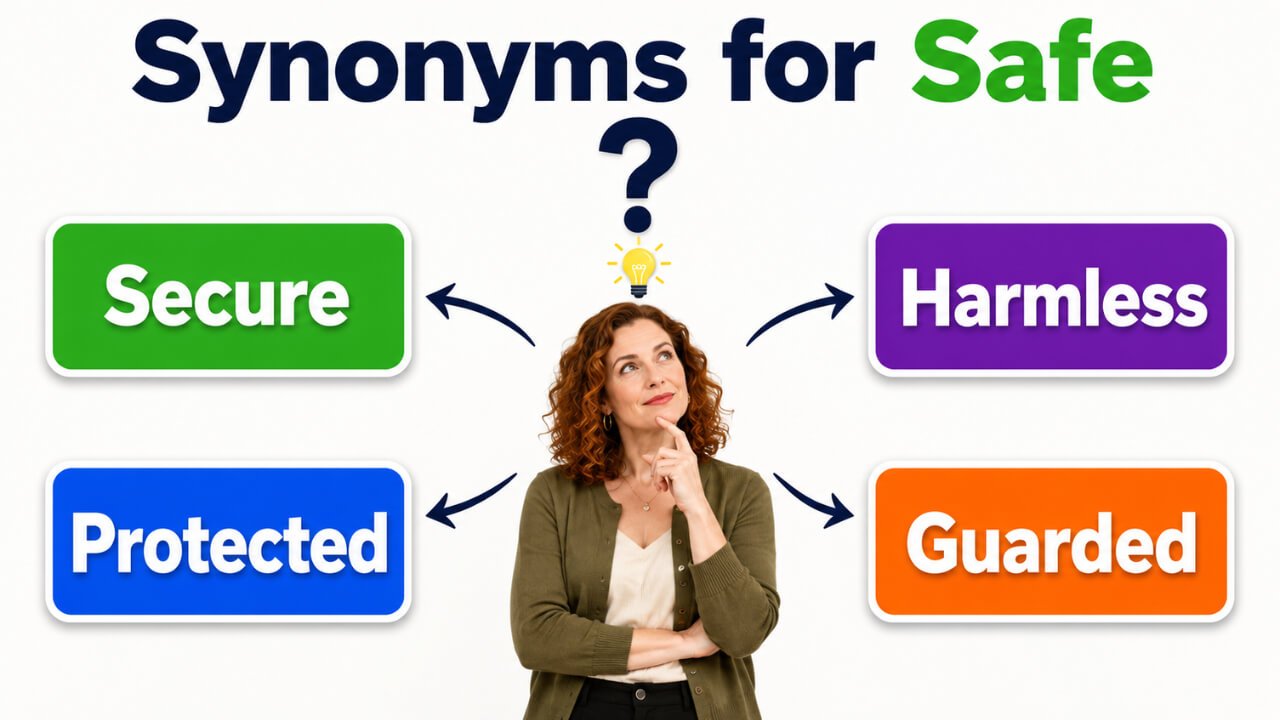
Quick Answer: Synonyms for safe include secure, protected, harmless, unharmed, sheltered, guarded, reliable, riskless, sound, and out of danger. The best synonym depends on context. Use secure for protection, harmless for something that will not cause damage, protected for safety from danger, reliable for something trustworthy, and sound for something stable or in good condition.
Pronunciation and Word Details
Word: Safe
Pronunciation: /seɪf/
Part of Speech: Adjective and noun
Meaning: Safe means protected from danger, harm, risk, loss, or injury.
US Pronunciation:
UK Pronunciation:
What Does “Safe” Mean?
Safe means free from danger, harm, risk, injury, or serious trouble. As an adjective, it describes a person, place, object, action, choice, method, or condition that is protected or not likely to cause damage.
The word safe can describe physical protection, emotional comfort, financial security, health, careful choices, or reliable results. For example, a safe road is not dangerous, a safe decision avoids major risk, and a safe person feels protected and unharmed.
Safe can also work as a noun when it means a strong locked box used for storing valuables. In most vocabulary and grammar use, however, safe is mainly used as an adjective.
Meaning, Tone, and Context of “Safe”
Safe is a common, neutral, and highly useful word. It works in formal writing, casual speech, school essays, workplace messages, instructions, warnings, and everyday conversation. It is simple, clear, and widely understood.
The tone of safe depends on context. In health or security writing, it can sound serious and practical. In emotional situations, it can sound caring and reassuring. In business or technical writing, it may sound responsible and cautious.
Safe is often used when discussing protection, danger, security, trust, permission, storage, travel, food, health, systems, plans, and choices. It is not usually emotional by itself, but it can become comforting when used in phrases like you are safe, safe place, or safe and sound.
When and How to Use “Safe”
For Physical Protection: Use safe when someone or something is not in danger.
Example: The children are safe inside the house.
For Low Risk: Use safe when a choice, plan, or method is unlikely to cause harm or loss.
Example: This is a safe option for beginners.
For Health and Use: Use safe when a product, food, medicine, or activity is not expected to harm people when used properly.
Example: The water is safe to drink.
For Emotional Comfort: Use safe when someone feels protected, respected, or comfortable.
Example: She felt safe talking about her feelings.
For Security: Use safe when something is protected from theft, damage, or danger.
Example: Keep your documents safe in a locked drawer.
For Reliability: Use safe when something is dependable and unlikely to fail.
Example: This is a safe method for solving the problem.
Best Synonyms for Safe
Secure: Protected from danger, loss, attack, or unwanted access.
Example: The files are secure in the locked cabinet.
Protected: Kept away from harm, danger, or damage.
Example: The garden is protected from strong winds.
Harmless: Not likely to hurt, damage, or cause trouble.
Example: The small insect is harmless.
Unharmed: Not injured or damaged after a dangerous event.
Example: Everyone was found unharmed after the storm.
Sheltered: Protected from danger, weather, pressure, or difficulty.
Example: The hikers waited in a sheltered area.
Guarded: Carefully protected or watched.
Example: The entrance was guarded throughout the night.
Reliable: Trusted to work well or produce a safe result.
Example: This is a reliable solution for daily use.
Sound: Strong, healthy, stable, or in good condition.
Example: The bridge is structurally sound.
Out of Danger: No longer facing immediate risk.
Example: The patient is now out of danger.
Riskless: Involving little or no risk.
Example: No choice is completely riskless, but this one is safer than the rest.
50 Synonyms for Safe with Short Meanings
- Secure: Protected from danger or loss.
- Protected: Kept safe from harm.
- Harmless: Not causing injury or damage.
- Unharmed: Not hurt or damaged.
- Sheltered: Covered or protected from danger.
- Guarded: Watched or defended carefully.
- Shielded: Protected by a barrier or defense.
- Defended: Protected against attack or harm.
- Reliable: Trusted and dependable.
- Sound: Stable, strong, or in good condition.
- Stable: Not likely to collapse, fail, or change suddenly.
- Riskless: Having little or no risk.
- Risk free: Without expected danger or loss.
- Low risk: Having only a small chance of danger.
- Cautious: Careful enough to avoid danger.
- Careful: Done with attention to avoid mistakes or harm.
- Prudent: Wise and careful in avoiding risk.
- Sensible: Reasonable and safe in judgment.
- Wise: Showing good judgment and caution.
- Soundproof: Protected from sound entering or leaving.
- Child safe: Suitable and safe for children.
- Non dangerous: Not likely to cause danger.
- Innocuous: Not harmful or offensive.
- Benign: Gentle and not harmful.
- Tame: Not wild, dangerous, or threatening.
- Peaceful: Free from violence or disturbance.
- Calm: Free from panic, danger, or disorder.
- Comfortable: Giving a feeling of ease and safety.
- Reassuring: Making someone feel less worried.
- Trustworthy: Worth trusting to be safe or honest.
- Dependable: Able to be relied on.
- Certain: Firm, sure, or not risky in result.
- Assured: Confident, protected, or guaranteed.
- Guaranteed: Promised or made certain.
- Insured: Protected financially against loss.
- Covered: Protected by support, insurance, or defense.
- Preserved: Kept safe from damage or decay.
- Saved: Rescued from danger or loss.
- Rescued: Taken out of danger.
- Untouched: Not harmed, changed, or damaged.
- Intact: Whole and not damaged.
- Uninjured: Not physically hurt.
- Undamaged: Not broken or harmed.
- Out of danger: No longer at immediate risk.
- In good hands: Being cared for by trusted people.
- Under protection: Being watched or defended.
- Well kept: Carefully protected and maintained.
- Hazard free: Without obvious danger.
- Protected from harm: Kept away from injury or damage.
- Free from danger: Not exposed to serious risk.
Read Also:
Synonyms for Red
Synonyms for Safe by Context
When Safe Means Protected
Use these synonyms when safe means defended from harm, danger, attack, loss, or damage.
Secure: The building is secure after the new locks were installed.
Protected: The documents are protected in a private folder.
Guarded: The area was guarded during the event.
Shielded: The equipment was shielded from heat.
When Safe Means Not Harmful
Use these synonyms when safe means something will not hurt people, damage property, or cause trouble.
Harmless: The cleaner is harmless when used correctly.
Innocuous: His comment sounded innocuous, but it was misunderstood.
Benign: The substance is considered benign in small amounts.
Non dangerous: This activity is non dangerous when supervised.
When Safe Means Careful or Sensible
Use these synonyms when safe means a wise choice that avoids unnecessary risk.
Prudent: It was prudent to check the weather before leaving.
Cautious: A cautious approach is better in uncertain conditions.
Sensible: Choosing a trusted route was the sensible decision.
Careful: Careful planning made the trip safer.
When Safe Means Reliable
Use these synonyms when safe means dependable, stable, or unlikely to fail.
Reliable: This is a reliable method for storing records.
Dependable: The old system is still dependable.
Sound: The plan is sound and practical.
Stable: The ladder must be stable before use.
When Safe Means Unhurt
Use these synonyms when safe describes someone or something that has not been injured or damaged.
Unharmed: The driver escaped unharmed.
Uninjured: The passengers were uninjured.
Intact: The package arrived intact.
Undamaged: The phone was undamaged after the fall.
Another Word for Safe
Another word for safe is secure. It is often the best single replacement because it clearly suggests protection from danger, loss, theft, damage, or unwanted access. However, the best alternative depends on the sentence. Use harmless for something that will not hurt anyone, reliable for something dependable, and unharmed for a person or thing that was not injured.
Original: The door is safe now.
Better Option: The door is secure now.
Original: This toy is safe for small children.
Better Option: This toy is harmless for small children when used properly.
Original: We need a safe way to complete the task.
Better Option: We need a reliable way to complete the task.
Original: The family is safe after the flood.
Better Option: The family is unharmed after the flood.
When Not to Use “Safe”
Do not use safe when a more specific word would make the meaning clearer. Safe can sound too general if you are discussing exact security, health standards, emotional comfort, technical reliability, or physical condition.
Weak: The password is safe.
Better: The password is secure.
Weak: The food is safe.
Better: The food is safe to eat.
Weak: The machine is safe.
Better: The machine is stable and properly guarded.
Weak: The patient is safe.
Better: The patient is out of danger.
Weak: This plan is safe.
Better: This plan is low risk and practical.
Safe can also sound repetitive if used too many times in one paragraph. Replace it with secure, protected, reliable, harmless, stable, or sound when the context needs variety.
Words Commonly Confused With Safe
Safe vs Secure: Safe means free from danger, while secure usually means strongly protected from danger, theft, attack, or unwanted access.
Safe vs Harmless: Safe can describe protection from many kinds of danger, while harmless means something does not cause injury, damage, or trouble.
Safe vs Protected: Safe describes the condition of being free from danger, while protected explains that something is being guarded or defended.
Safe vs Reliable: Safe means not dangerous, while reliable means dependable or likely to work correctly.
Safe vs Sound: Safe means free from danger, while sound means strong, stable, healthy, or in good condition.
Safe vs Cautious: Safe describes a condition or result, while cautious describes careful behavior used to avoid danger.
Which Synonym Should You Choose?
Choose secure when writing about locks, accounts, buildings, documents, storage, or protection from theft and access.
Choose protected when something is defended from harm, weather, damage, pressure, or danger.
Choose harmless when describing something that does not cause injury, pain, damage, or trouble.
Choose unharmed when a person, animal, or object survives danger without injury.
Choose reliable when writing about a method, system, tool, source, or process that can be trusted.
Choose sound when describing a plan, structure, argument, decision, or condition that is stable and strong.
Choose cautious when describing careful behavior that avoids risk.
Choose low risk when writing about decisions, investments, plans, or actions that have a small chance of danger or loss.
Choose out of danger when someone has passed through a risky situation and is no longer facing immediate harm.
Real Life Examples of “Safe” in Sentences
Original: The children are safe at school.
Better Option: The children are protected at school.
Original: Keep your money safe while traveling.
Better Option: Keep your money secure while traveling.
Original: This medicine is safe for most adults.
Better Option: This medicine is harmless for most adults when used as directed.
Original: She felt safe in her new home.
Better Option: She felt sheltered in her new home.
Original: The plan seems safe.
Better Option: The plan seems low risk.
Original: The building is safe after the repairs.
Better Option: The building is sound after the repairs.
Original: The road is safe during the day.
Better Option: The road is less dangerous during the day.
Original: The dog is safe around children.
Better Option: The dog is gentle around children.
Original: The files are safe on the server.
Better Option: The files are secure on the server.
Original: Everyone is safe after the accident.
Better Option: Everyone is unharmed after the accident.
Synonym Groups and Usage Differences
Protection Group
Words like secure, protected, guarded, shielded, and defended focus on safety created by active protection. Use them when something is being watched, locked, covered, or defended.
Example: The entrance is guarded to keep visitors safe.
Harm Prevention Group
Words like harmless, innocuous, benign, and non dangerous focus on something that does not cause injury or damage. These words are useful for products, animals, substances, actions, and comments.
Example: The spray is harmless when used correctly.
Careful Choice Group
Words like cautious, prudent, careful, sensible, and wise describe behavior or decisions that avoid unnecessary risk.
Example: A cautious driver keeps enough distance from other cars.
Reliability Group
Words like reliable, dependable, sound, and stable show that something can be trusted to work, last, or support a safe outcome.
Example: A reliable backup plan can prevent bigger problems.
Unhurt Condition Group
Words like unharmed, uninjured, intact, and undamaged describe people or things that remain safe after danger, pressure, or impact.
Example: The vase fell but remained intact.
Antonyms of Safe
Safe has different opposites depending on meaning. If safe means protected, the opposite may be unprotected. If safe means not harmful, the opposite may be dangerous. If safe means reliable, the opposite may be risky or unstable.
Dangerous: Likely to cause harm, injury, or damage.
Unsafe: Not protected from danger or risk.
Risky: Involving a chance of loss, harm, or failure.
Hazardous: Full of possible danger.
Harmful: Causing damage, pain, or injury.
Threatening: Showing possible danger or harm.
Unprotected: Not defended, covered, or guarded.
Vulnerable: Easily harmed, attacked, or damaged.
Unstable: Not steady, secure, or reliable.
Insecure: Not safe, protected, or confident.
Comparison: Safe vs Related Words
Safe vs Secure
Safe means free from danger. Secure means strongly protected against danger, theft, attack, or unwanted access.
Example With Safe: The children are safe in the classroom.
Example With Secure: The classroom is secure after the doors are locked.
Safe vs Protected
Safe describes the condition of being away from danger. Protected explains that someone or something is being defended or covered.
Example With Safe: The plants are safe inside.
Example With Protected: The plants are protected from frost.
Safe vs Harmless
Safe can refer to general protection. Harmless means something does not cause injury, damage, or trouble.
Example With Safe: The activity is safe for beginners.
Example With Harmless: The activity is harmless when done slowly.
Safe vs Reliable
Safe means not dangerous. Reliable means dependable and likely to work correctly.
Example With Safe: This route is safe at night.
Example With Reliable: This route is reliable during heavy traffic.
Safe vs Sound
Safe means free from danger. Sound means strong, stable, healthy, or reasonable.
Example With Safe: The bridge is safe to cross.
Example With Sound: The bridge is structurally sound.
Common Phrases and Expressions With Safe
Safe and Sound: Protected and unharmed after danger or travel.
Safe Place: A place where someone feels protected or comfortable.
Safe Choice: A choice with low risk.
Safe Bet: An option likely to succeed.
Safe Distance: Enough space to avoid danger.
Safe Haven: A place of protection or refuge.
Safe Passage: Travel through an area without harm.
Safe to Say: Reasonable to believe or state.
Keep Safe: Stay protected from harm.
Play It Safe: Avoid risk by choosing a careful option.
Common Mistakes to Avoid
A common mistake is using safe when a more exact synonym would be stronger. For example, secure is better for passwords, locks, documents, and private information. Harmless is better for things that do not cause injury or damage. Reliable is better for tools, methods, and systems.
Another mistake is using safe without completing the meaning. Instead of writing the food is safe, write the food is safe to eat. Instead of the road is safe, write the road is safe for walking during the day.
Avoid repeating safe too often in one paragraph. Mix in words like protected, secure, stable, unharmed, low risk, and sound to make your writing clearer and more natural.
Conclusion
Synonyms for safe help you describe protection, comfort, reliability, and low risk with more precision. Use secure for strong protection, protected for defense from harm, harmless for things that do not cause damage, reliable for trusted methods, and unharmed for people or objects that survive danger without injury. The best synonym depends on whether you mean physical safety, emotional comfort, health, security, careful judgment, or stable condition.
FAQs About Synonyms for Safe
What are the best synonyms for safe?
The best synonyms for safe are secure, protected, harmless, unharmed, sheltered, guarded, reliable, sound, stable, and out of danger.
What is another word for safe in formal writing?
In formal writing, use secure, protected, reliable, sound, or low risk, depending on the sentence.
What is another word for safe from danger?
Another word for safe from danger is protected. You can also use secure, guarded, shielded, or out of danger.
What is another word for safe to use?
Another word for safe to use is harmless, suitable, reliable, or non dangerous, depending on the product, method, or activity.
Is secure the same as safe?
Secure and safe are closely related, but they are not always the same. Safe means free from danger, while secure means strongly protected from danger, theft, attack, or unwanted access.
What is the opposite of safe?
The opposite of safe can be dangerous, unsafe, risky, harmful, hazardous, unprotected, or vulnerable, depending on the context.
Can safe describe emotions?
Yes, safe can describe emotional comfort. For example, she felt safe talking to him means she felt respected, protected, and comfortable enough to speak openly.
