
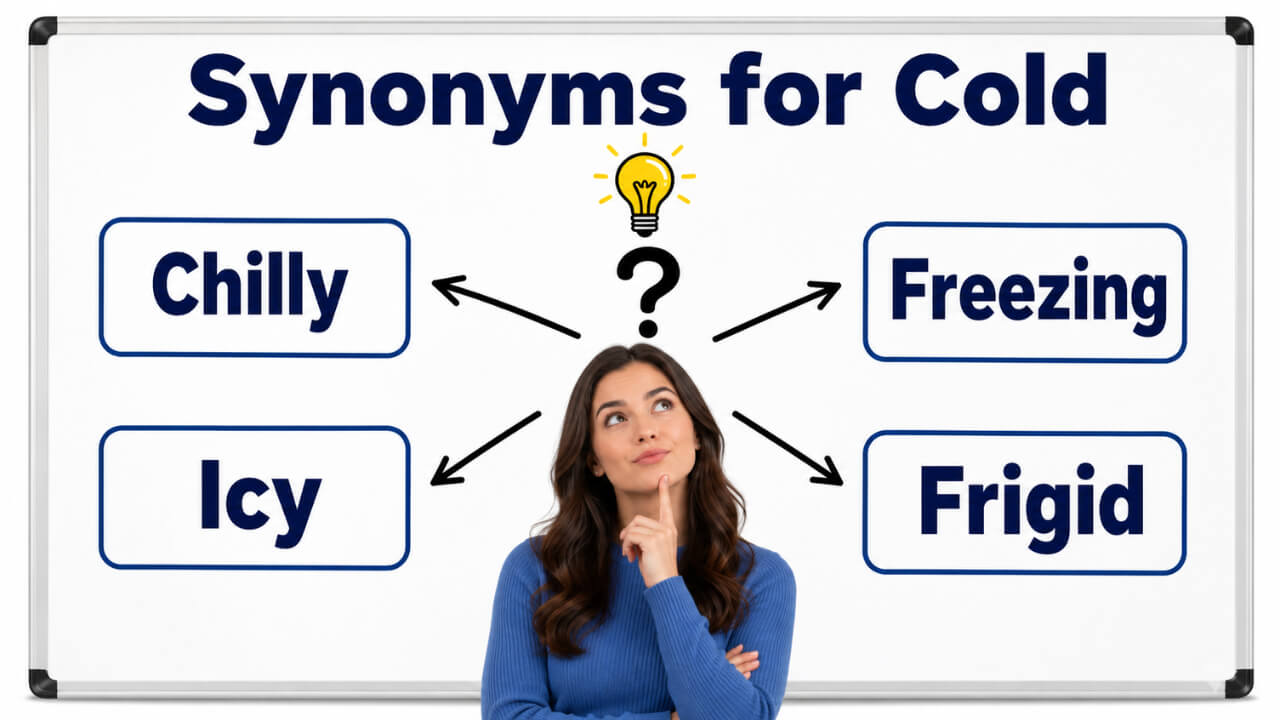
Quick Answer: The best synonyms for cold include chilly, cool, freezing, frigid, icy, frosty, nippy, wintry, aloof, and unfriendly. Use chilly for mildly cold weather, freezing for very low temperature, frigid for extreme cold, icy for surfaces or tone, cool for slightly cold conditions, and aloof or unfriendly when cold describes a person’s behavior. These synonyms for cold help you choose the right word for temperature, emotion, attitude, weather, food, or writing style.
Pronunciation and Word Details
Word: Cold
Pronunciation: /koʊld/ or /kəʊld/
Part of Speech: Adjective and noun
Meaning: Cold means having a low temperature, lacking warmth, showing little emotion, or referring to an illness with sneezing and a runny nose.
US Pronunciation:
UK Pronunciation:
What Does “Cold” Mean?
Direct Answer: Cold means low in temperature, lacking warmth, or showing little emotion.
The word cold is most often used as an adjective. It can describe weather, water, food, hands, rooms, air, drinks, places, and objects. For example, cold water means water with a low temperature, while a cold room means a room that feels uncomfortable because it lacks warmth.
Cold can also describe behavior or emotion. A cold response may mean distant, unfriendly, or without sympathy. As a noun, a cold means a common illness that may include sneezing, coughing, sore throat, and a runny nose.
Meaning, Tone, and Context of “Cold”
Tone: Cold is a neutral and common word when it describes temperature, but it can sound negative when it describes a person’s behavior.
Formality: Cold works in casual speech, formal writing, weather descriptions, health writing, fiction, essays, emails, and everyday conversation.
Emotional Meaning: When cold describes a person, voice, look, or reply, it often means distant, harsh, unfriendly, emotionless, or lacking warmth.
Technical Use: In scientific or weather contexts, cold can describe low temperature, reduced heat, freezing conditions, or climate.
Common Contexts: Cold appears in descriptions of weather, winter, illness, food, drinks, emotions, body temperature, personality, relationships, and atmosphere.
When and How to Use “Cold”
For Weather: Use cold when the air temperature feels low or uncomfortable.
Example: The cold morning made everyone wear warm coats.
For Food and Drinks: Use cold when something is served or kept at a low temperature.
Example: She ordered a cold drink after the long walk.
For Objects and Surfaces: Use cold when something feels low in temperature to the touch.
Example: The metal gate felt cold in his hand.
For Emotions: Use cold when someone seems distant, uncaring, or without warmth.
Example: His cold reply hurt her feelings.
For Atmosphere: Use cold when a place feels uncomfortable, unwelcoming, or lacking warmth.
Example: The empty hall had a cold feeling.
For Illness: Use cold as a noun when talking about a mild common sickness.
Example: He stayed home because he had a cold.
Best Synonyms for Cold
Chilly: Slightly cold in a way that is noticeable or uncomfortable.
Example: The evening air felt chilly after sunset.
Cool: Slightly cold but not usually unpleasant.
Example: The cool breeze made the walk pleasant.
Freezing: Extremely cold or at the temperature where water turns to ice.
Example: My hands were freezing after the snowstorm.
Frigid: Very cold, especially in a strong or serious way.
Example: The hikers struggled through the frigid wind.
Icy: Very cold like ice, or emotionally unfriendly.
Example: She gave him an icy look.
Frosty: Cold with frost, or unfriendly in attitude.
Example: Their conversation became frosty after the argument.
Nippy: Slightly cold, especially in a sharp but casual way.
Example: It is a bit nippy outside this morning.
Wintry: Cold in a way that feels like winter.
Example: A wintry breeze moved through the town.
Aloof: Emotionally distant or not friendly.
Example: He seemed aloof during the meeting.
Unfriendly: Not warm, kind, or welcoming.
Example: Her unfriendly tone made the room quiet.
50 Synonyms for Cold with Short Meanings
- Chilly: Mildly cold and uncomfortable.
- Cool: Slightly cold, often in a pleasant way.
- Freezing: Extremely cold.
- Frigid: Severely cold or emotionally distant.
- Icy: Very cold or unfriendly.
- Frosty: Cold with frost or cool in attitude.
- Nippy: A little cold in a sharp way.
- Wintry: Cold like winter.
- Bitter: Extremely cold and unpleasant.
- Brisk: Cool and fresh, often with energy.
- Arctic: Extremely cold like polar regions.
- Glacial: Very cold or very slow and distant.
- Frozen: Turned into ice or extremely cold.
- Frostbitten: Damaged or affected by extreme cold.
- Subzero: Below the freezing point.
- Below freezing: Colder than the temperature where water freezes.
- Bone chilling: So cold it feels deeply uncomfortable.
- Piercing: Sharply cold and intense.
- Raw: Cold, damp, and unpleasant.
- Bleak: Cold, empty, and depressing.
- Damp: Slightly wet and cold.
- Dank: Cold, wet, and unpleasant.
- Crisp: Cool, fresh, and clear.
- Fresh: Cool and clean feeling.
- Refrigerated: Kept cold for storage.
- Chilled: Made cold or cooled down.
- Cooled: Reduced in temperature.
- Ice cold: Extremely cold.
- Coldish: Somewhat cold.
- Unheated: Not warmed by heat.
- Drafty: Letting cold air move through.
- Snowy: Covered with snow or full of snow.
- Polar: Extremely cold like the poles.
- Gelid: Very cold, often in formal writing.
- Algid: Cold, especially in medical or formal use.
- Aloof: Emotionally distant.
- Distant: Not emotionally close.
- Detached: Not emotionally involved.
- Unfeeling: Showing no sympathy or emotion.
- Emotionless: Showing no feeling.
- Unsympathetic: Not showing care or concern.
- Unfriendly: Not warm or welcoming.
- Hostile: Harsh, unfriendly, or opposed.
- Severe: Harsh, serious, or intense.
- Stern: Serious and not warm.
- Hard: Lacking softness, warmth, or sympathy.
- Harsh: Cruel, rough, or unpleasant.
- Impersonal: Lacking personal warmth.
- Reserved: Quiet and not openly emotional.
- Standoffish: Distant and not friendly.
Read Also:
Synonyms for New

Synonyms for Cold by Context
When Cold Means Low Temperature
Use these words when cold describes weather, air, water, food, rooms, hands, or objects.
Chilly: The chilly wind made everyone close the windows.
Cool: The room felt cool after the rain.
Freezing: The water was freezing after the ice melted.
Frigid: The frigid night made travel difficult.
When Cold Means Extremely Cold
Use these words when the temperature is very low, intense, or uncomfortable.
Bitter: A bitter wind blew across the field.
Arctic: The arctic air made breathing feel sharp.
Glacial: The glacial water shocked his skin.
Bone chilling: The bone chilling cold kept everyone indoors.
When Cold Means Slightly Cold
Use these words when the temperature is low but not extreme.
Cool: The cool air felt pleasant in the morning.
Nippy: It is nippy enough to wear a jacket.
Brisk: A brisk breeze moved through the street.
Crisp: The crisp morning felt fresh and clean.
When Cold Means Emotionally Distant
Use these words when cold describes behavior, attitude, voice, look, or personality.
Aloof: He stayed aloof during the family discussion.
Distant: Her distant tone made him stop talking.
Detached: The manager gave a detached answer.
Unfeeling: His unfeeling words upset the group.
When Cold Means Unfriendly or Harsh
Use these words when cold means not kind, welcoming, or sympathetic.
Unfriendly: The clerk gave an unfriendly response.
Frosty: Their greeting was polite but frosty.
Icy: She answered with an icy voice.
Hostile: The room became hostile after the argument.
When Cold Means Stored at a Low Temperature
Use these words when talking about food, drinks, storage, or preservation.
Chilled: The chilled juice tasted refreshing.
Refrigerated: Keep the refrigerated food sealed.
Cooled: The soup cooled before dinner.
Ice cold: He drank an ice cold glass of water.
Another Word for Cold
Direct Answer: The best single replacement for cold is usually chilly, but the best alternative depends on context.
Use chilly for mild weather, freezing for extreme temperature, cool for slight coldness, frigid for severe cold, and aloof when talking about distant behavior.
Original: The cold wind made us walk faster.
Better Option: The chilly wind made us walk faster.
Original: The water was very cold.
Better Option: The water was freezing.
Original: His cold answer surprised everyone.
Better Option: His aloof answer surprised everyone.
Original: The room felt cold and empty.
Better Option: The room felt bleak and empty.
When Not to Use “Cold”
Avoid cold when it is too general and does not explain the exact meaning. Cold can mean low temperature, illness, emotional distance, lack of kindness, or lack of warmth. A more precise synonym can make writing clearer.
Weak: The weather was cold.
Better: The weather was bitter and windy.
Weak: She gave me a cold look.
Better: She gave me an icy look.
Weak: The food was cold.
Better: The food was chilled.
Weak: His voice sounded cold.
Better: His voice sounded detached.
Weak: The room was cold.
Better: The room was drafty and unheated.
Words Commonly Confused With Cold
Cold vs Cool: Cold usually means lower temperature and may feel uncomfortable. Cool means slightly cold and can feel pleasant.
Cold vs Chilly: Cold is general. Chilly means mildly cold, especially weather or air.
Cold vs Freezing: Cold can mean low temperature in general. Freezing means extremely cold or at the point where water becomes ice.
Cold vs Frigid: Cold is common and neutral. Frigid is stronger and more formal, often meaning severely cold.
Cold vs Icy: Cold describes low temperature. Icy can describe ice, a sharp cold feeling, or an unfriendly attitude.
Cold vs Frosty: Frosty can mean covered with frost or emotionally cool. Cold is broader and more general.
Cold vs Aloof: Cold can describe temperature or emotion. Aloof only describes emotional distance or reserved behavior.
Which Synonym Should You Choose?
Choose chilly when writing about mildly cold weather, air, mornings, evenings, or rooms.
Choose cool when the temperature is slightly low but not harsh or unpleasant.
Choose freezing when writing about very cold weather, water, hands, feet, or outdoor conditions.
Choose frigid when you need a stronger, more formal word for severe cold.
Choose icy when describing frozen surfaces, cold wind, or an unfriendly look, voice, or reply.
Choose frosty when describing weather with frost or a cool relationship between people.
Choose nippy when writing casual sentences about slightly cold weather.
Choose wintry when describing weather, scenes, air, or atmosphere that feels like winter.
Choose aloof when describing a person who seems emotionally distant.
Choose unfriendly when the meaning is about behavior that lacks kindness or warmth.
Real Life Examples of “Cold” in Sentences
Original: The cold air came through the window.
Better Option: The chilly air came through the window.
Original: My hands are cold after washing the dishes.
Better Option: My hands are freezing after washing the dishes.
Original: She gave him a cold smile.
Better Option: She gave him an icy smile.
Original: The cold weather delayed the trip.
Better Option: The wintry weather delayed the trip.
Original: His cold tone made the conversation awkward.
Better Option: His detached tone made the conversation awkward.
Original: The cold water made him step back.
Better Option: The frigid water made him step back.
Original: The meeting had a cold atmosphere.
Better Option: The meeting had a frosty atmosphere.
Original: It was cold outside this morning.
Better Option: It was nippy outside this morning.
Original: The cold room needed a heater.
Better Option: The unheated room needed a heater.
Original: Her cold behavior confused her friends.
Better Option: Her aloof behavior confused her friends.
Synonym Groups and Usage Differences
Mild Temperature Group
Words like chilly, cool, nippy, and brisk describe low temperature that is noticeable but not extreme.
Example: A brisk breeze made the walk refreshing.
Extreme Temperature Group
Words like freezing, frigid, arctic, and bitter describe strong, harsh, or dangerous cold.
Example: The freezing wind made the roads unsafe.
Winter Weather Group
Words like wintry, snowy, frosty, and polar connect cold with winter, snow, frost, and seasonal weather.
Example: The town looked quiet under the wintry sky.
Cold Surface Group
Words like icy, frozen, chilled, and ice cold describe objects, liquids, or surfaces with very low temperature.
Example: The icy steps were dangerous after sunset.
Emotional Distance Group
Words like aloof, distant, detached, and reserved describe people who do not show much warmth or closeness.
Example: His reserved manner made him seem hard to know.
Unkind Behavior Group
Words like unfriendly, unfeeling, unsympathetic, and hostile describe attitudes that lack kindness, care, or emotional warmth.
Example: Her unsympathetic answer made the student feel worse.
Antonyms of Cold
Hot: Having a high temperature.
Warm: Having gentle heat or kindness.
Heated: Made hot or full of strong emotion.
Burning: Extremely hot or intense.
Boiling: Very hot, especially for liquids.
Scorching: Extremely hot and uncomfortable.
Mild: Not very cold or harsh.
Tepid: Slightly warm, especially for liquids.
Toasty: Pleasantly warm and comfortable.
Cozy: Warm, comfortable, and pleasant.
Friendly: Warm and kind in behavior.
Warmhearted: Kind, caring, and emotionally warm.
Affectionate: Showing love, care, or tenderness.
Sympathetic: Showing understanding and concern.
Welcoming: Friendly and pleasant to others.
Comparison: Cold vs Related Words
Cold vs Chilly
Cold is a broad word for low temperature. Chilly usually means mildly cold in a way that makes you want a jacket or warmer clothing.
Example With Cold: The room was cold after the heater stopped working.
Example With Chilly: The room was chilly after the heater stopped working.
Cold vs Cool
Cold often feels uncomfortable, while cool can feel pleasant, fresh, or only slightly low in temperature.
Example With Cold: The water was too cold to swim in.
Example With Cool: The water was cool and refreshing.
Cold vs Freezing
Cold can mean any low temperature. Freezing means extremely cold or cold enough for water to turn into ice.
Example With Cold: My feet are cold.
Example With Freezing: My feet are freezing.
Cold vs Frigid
Cold is common in everyday speech. Frigid is stronger and often used for severe weather, water, wind, or emotional distance.
Example With Cold: The cold wind blew through the street.
Example With Frigid: The frigid wind blew through the street.
Cold vs Icy
Cold describes temperature in a general way. Icy can describe a frozen surface or an unfriendly tone, look, or response.
Example With Cold: She gave him a cold reply.
Example With Icy: She gave him an icy reply.
Cold vs Frosty
Cold describes low temperature or distant behavior. Frosty often suggests frost in weather or tension in relationships.
Example With Cold: Their conversation became cold.
Example With Frosty: Their conversation became frosty.
Cold vs Aloof
Cold can describe both temperature and attitude. Aloof describes a person who stays emotionally distant or does not easily connect with others.
Example With Cold: He sounded cold during the call.
Example With Aloof: He sounded aloof during the call.
Common Phrases and Expressions With Cold
Cold Weather: Weather with low temperature.
Cold Air: Air that feels low in temperature.
Cold Water: Water that is not warm.
Cold Drink: A drink served at a low temperature.
Cold Hands: Hands that feel low in temperature.
Cold Look: A look that seems unfriendly or emotionless.
Cold Voice: A tone that sounds distant or unkind.
Cold Shoulder: Unfriendly treatment or deliberate ignoring.
Cold Feet: Nervousness before doing something important.
Common Cold: A mild illness with symptoms such as sneezing or a runny nose.
Common Mistakes to Avoid
Repeating Cold Too Often: Do not use cold in every sentence when describing weather, food, mood, and behavior. Use chilly, freezing, icy, or aloof to add variety and precision.
Using Freezing for Mild Cold: Freezing is strong. Do not use it when the temperature is only slightly low unless you want casual exaggeration.
Confusing Cool and Cold: Cool may be pleasant, while cold is often uncomfortable. Choose cool for a refreshing breeze and cold for uncomfortable air.
Using Frigid in Very Casual Sentences: Frigid can sound formal or intense. It works best for severe weather, water, wind, or emotionally distant behavior.
Using Cold for Every Emotion: A cold person may be aloof, detached, unfriendly, unsympathetic, or reserved. Choose the word that explains the attitude more clearly.
Ignoring Context: Cold can describe temperature, illness, mood, personality, or atmosphere. Always check the noun before choosing a synonym.
Conclusion
Synonyms for cold make your writing more accurate and expressive. Use chilly for mild weather, freezing for extreme temperature, cool for slight coldness, frigid for severe conditions, and icy for frozen surfaces or unfriendly tone. When cold describes behavior, words like aloof, distant, unfriendly, and detached often work better. The best synonym depends on whether you mean temperature, emotion, weather, food, health, or atmosphere.
FAQs About Synonyms for Cold
What are the best synonyms for cold?
The best synonyms for cold are chilly, cool, freezing, frigid, icy, frosty, nippy, wintry, aloof, and unfriendly.
What is another word for cold weather?
Another word for cold weather is chilly weather, freezing weather, frigid weather, wintry weather, or bitter weather, depending on intensity.
What is another word for very cold?
Good words for very cold include freezing, frigid, icy, arctic, bitter, glacial, and bone chilling.
What is another word for a cold person?
A cold person can be called aloof, distant, detached, unfriendly, reserved, unfeeling, or standoffish.
What is the difference between cold and chilly?
Cold is a general word for low temperature. Chilly usually means mildly cold and slightly uncomfortable.
What is the opposite of cold?
The opposite of cold can be hot, warm, heated, toasty, friendly, warmhearted, or welcoming, depending on the meaning.
Can cold describe emotions?
Yes. Cold can describe emotions, tone, behavior, or personality when someone seems distant, unfriendly, uncaring, or lacking warmth.
